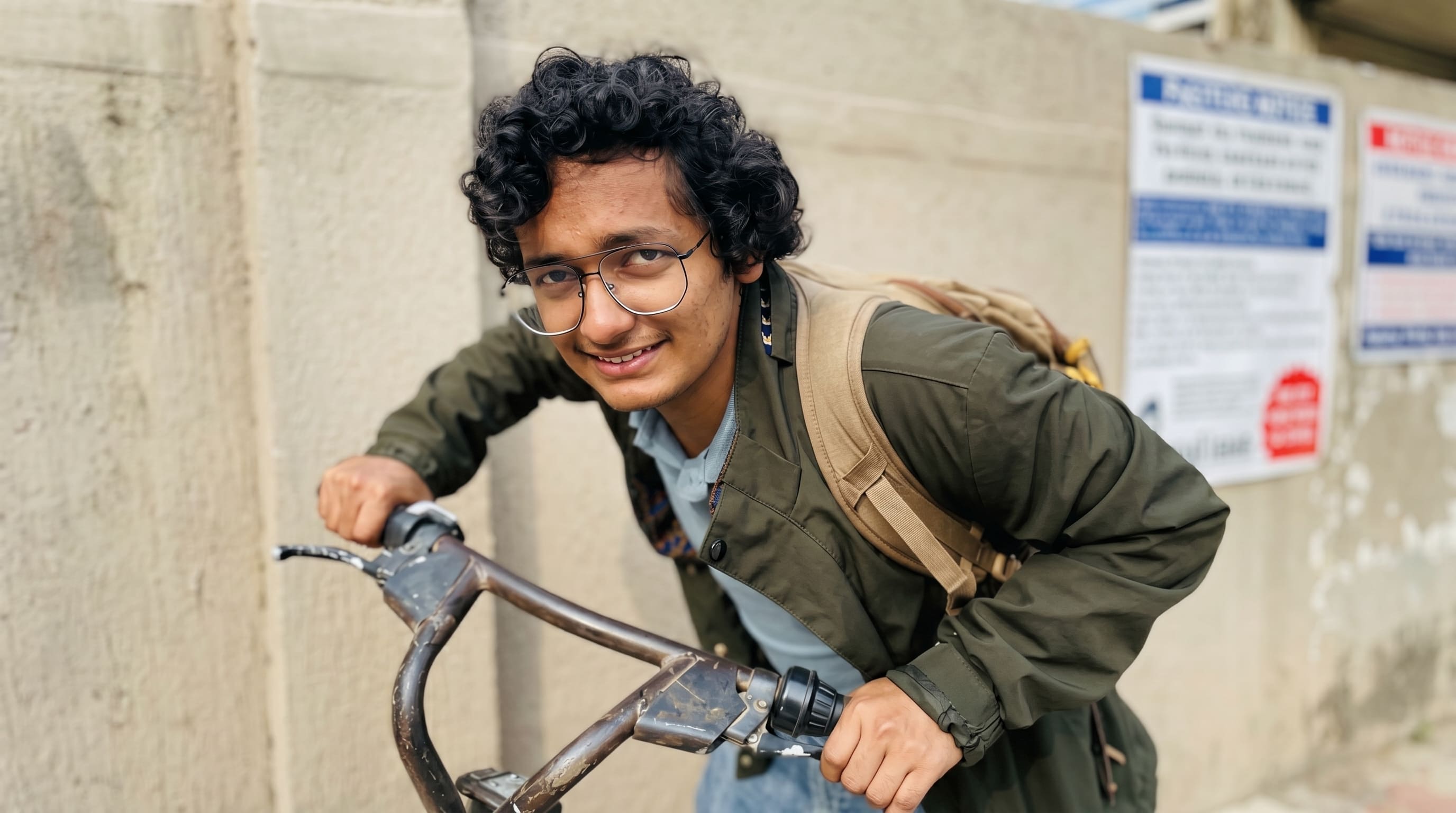
I was born and raised in Thalassery, a small coastal town in North Malabar. My family got our first computer in 2004, and I still remember being fascinated by how this huge box connected to a monitor could somehow let me play games like Age of Empires. I didn't fully understand how it worked, but I wanted to. That curiosity slowly turned into late nights exploring computers, learning bits of JavaScript, and spending way too much time pulling things apart just to understand them better.
At some point, I came across Apple's Human Interface Guidelines, and it completely changed how I looked at technology. I was fascinated that there were people thinking deeply about how something should feel to use — not just how it looked, but how it behaved. That's what pulled me toward design.
My path into design wasn't very smooth. My first college experience honestly felt like a mess. I made great friends there, but I struggled a lot and realized I lacked many of the skills I needed. After a year, I left and started interning instead, trying to learn everything I could about computers, interfaces, and digital products. Eventually, I got into National Institute of Design, where I discovered workshops, prototyping, materials, and physical making. That was the first time design started feeling real to me.
After a few internships, I joined frog as a Design Technologist / Industrial Designer. For two years, I got to work across interfaces, technology, and physical products, and it shaped the way I think about design today. I've never really seen hardware and software as separate things — to me, they're both part of the same experience.
Later, I started my own lifestyle products brand. It didn't turn out exactly the way I imagined, but it taught me more than any job probably could. I learned what it means to take an idea from a sketch to something real that people can hold, use, criticize, and connect with.
These days, I'm mostly interested in the space where technology and physical products meet. I care a lot about the small details — how a product feels in the hand, how materials age, how interfaces respond, how vibration, sound, weight, and movement affect the experience of using something. A big part of my process is still experimentation: sketching, prototyping, rebuilding things, making mistakes, and slowly developing better judgment over time.
Outside of work, I spend a lot of time building personal projects, improving my rendering and prototyping skills, and documenting the process of becoming better at what I do. I'm also deeply into motorcycles, and whenever I can, I'm out riding trails or exploring random back roads around Kerala. A lot of my interest in products probably comes from there too — from paying attention to machines, terrain, ergonomics, and the feeling of being connected to something mechanical.
Right now, I'm looking for opportunities to keep learning, work with thoughtful people, and contribute to products that bring together technology, engineering, and design in meaningful ways.
My superpowers
Hardware meets software
I've never seen physical and digital as separate disciplines. Working across interfaces, electronics, and objects means I can spot where they break each other — and fix it.
Hands-on making
My process starts with sketches and ends with something you can hold. I prototype early and often — mistakes made in foam or code are cheaper than ones made in tooling.
Obsessive detail
I notice how materials age, how a click sounds, how weight shifts in the hand. I believe the tiny things people stop consciously noticing are the ones that make or break a product.
Learning by taking apart
Whether it's a motorcycle engine or a design system, I understand things best by dismantling them. Curiosity is the oldest skill I have — everything else follows from it.
MY VALUES
Keep learning.
Have fun while learning.
Empathize.