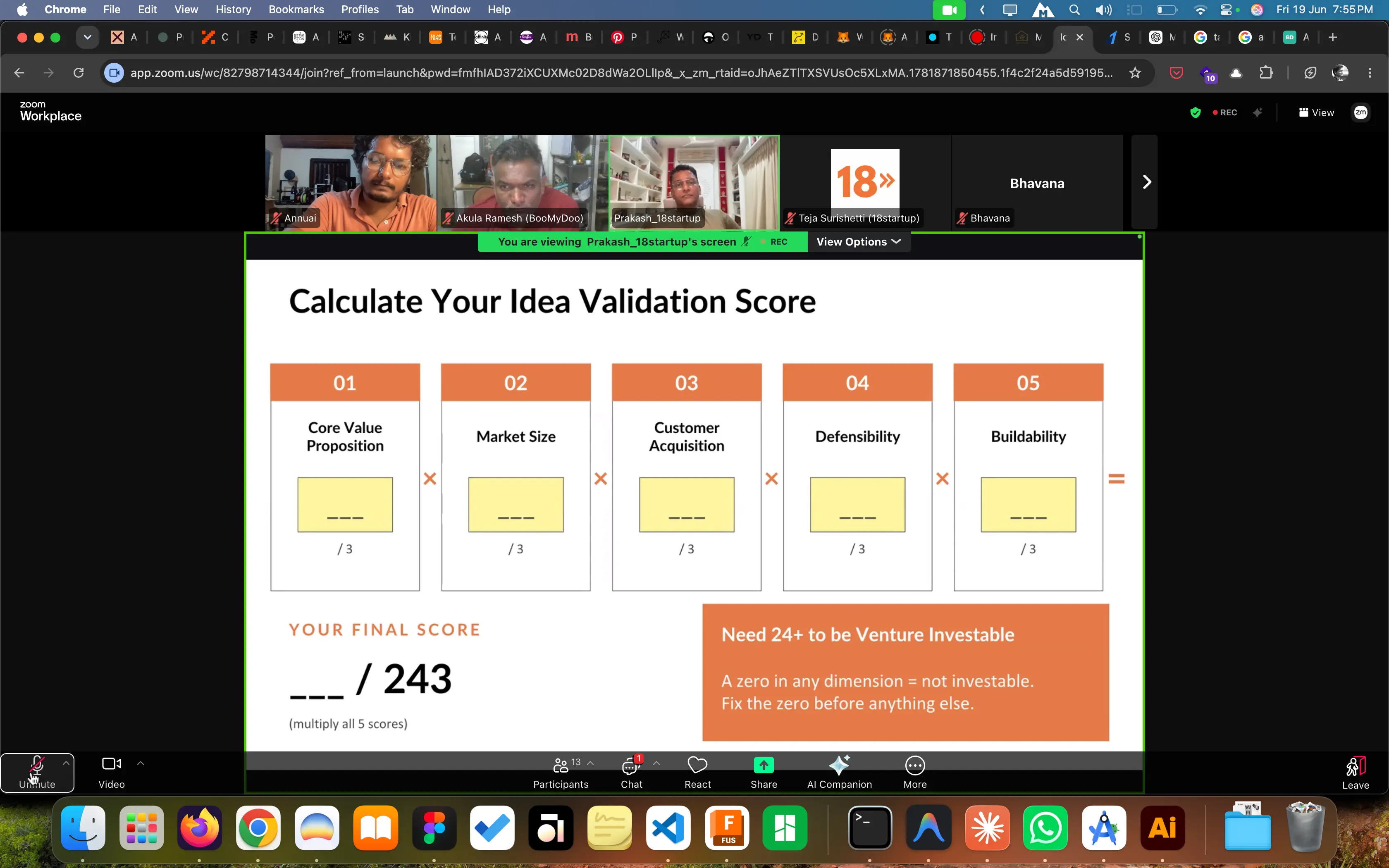
Today I attended an idea validation workshop for startup founders. The goal of the session was simple: determine whether your idea is "venture investable" using a scoring framework. By the end of the workshop, every participant would calculate a final score based on five dimensions: core value proposition, market size, customer acquisition, defensibility, and buildability.
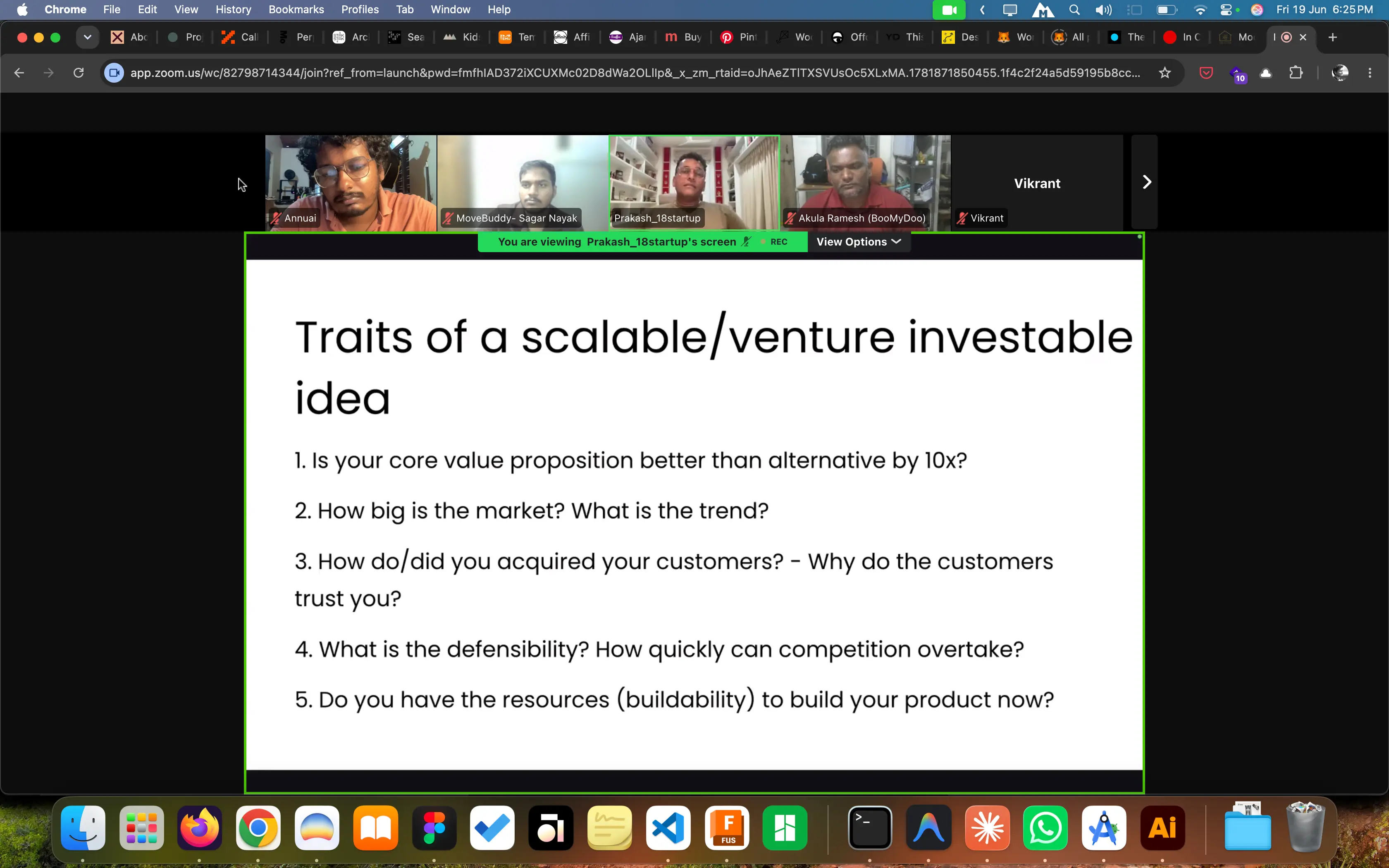
According to the framework, a startup needs a score of at least 24 to be considered investable. My final score was 4.
At first glance, that sounds terrible.
But the more I thought about it, the more interesting the result became. Not because I scored low, but because it forced me to question what exactly we are measuring when we evaluate a startup.
The five dimensions of venture investability
The workshop evaluated startups across five dimensions:
- Core value proposition
- Market size
- Customer acquisition
- Defensibility
- Buildability
The idea is straightforward. If your startup performs well across all five categories, investors are more likely to see it as a venture-scale opportunity.
On paper, it makes sense. Investors are looking for businesses that can grow rapidly, dominate markets, and generate outsized returns.
The first and most important question was whether the startup's core value proposition was at least ten times better than the alternatives.
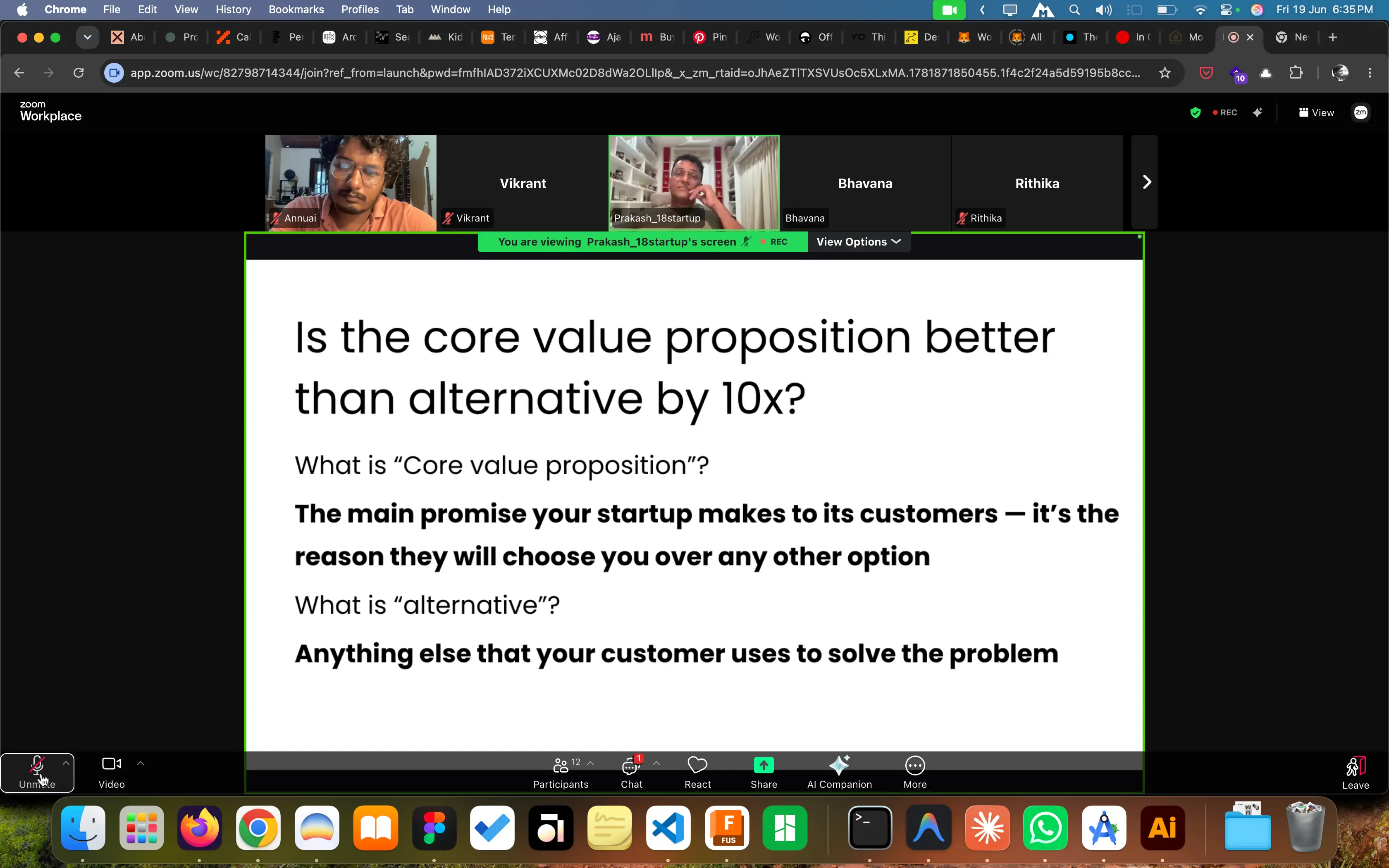
The workshop defined a core value proposition as the main promise a startup makes to its customers — the reason they would choose you over any other option.
It also pointed out something important: your alternative is not necessarily another company. It is anything a customer currently uses to solve the problem.
I actually liked this idea. Most founders think they are competing with other startups when in reality they are competing with existing habits, workarounds, and customer inertia.
What customers actually value
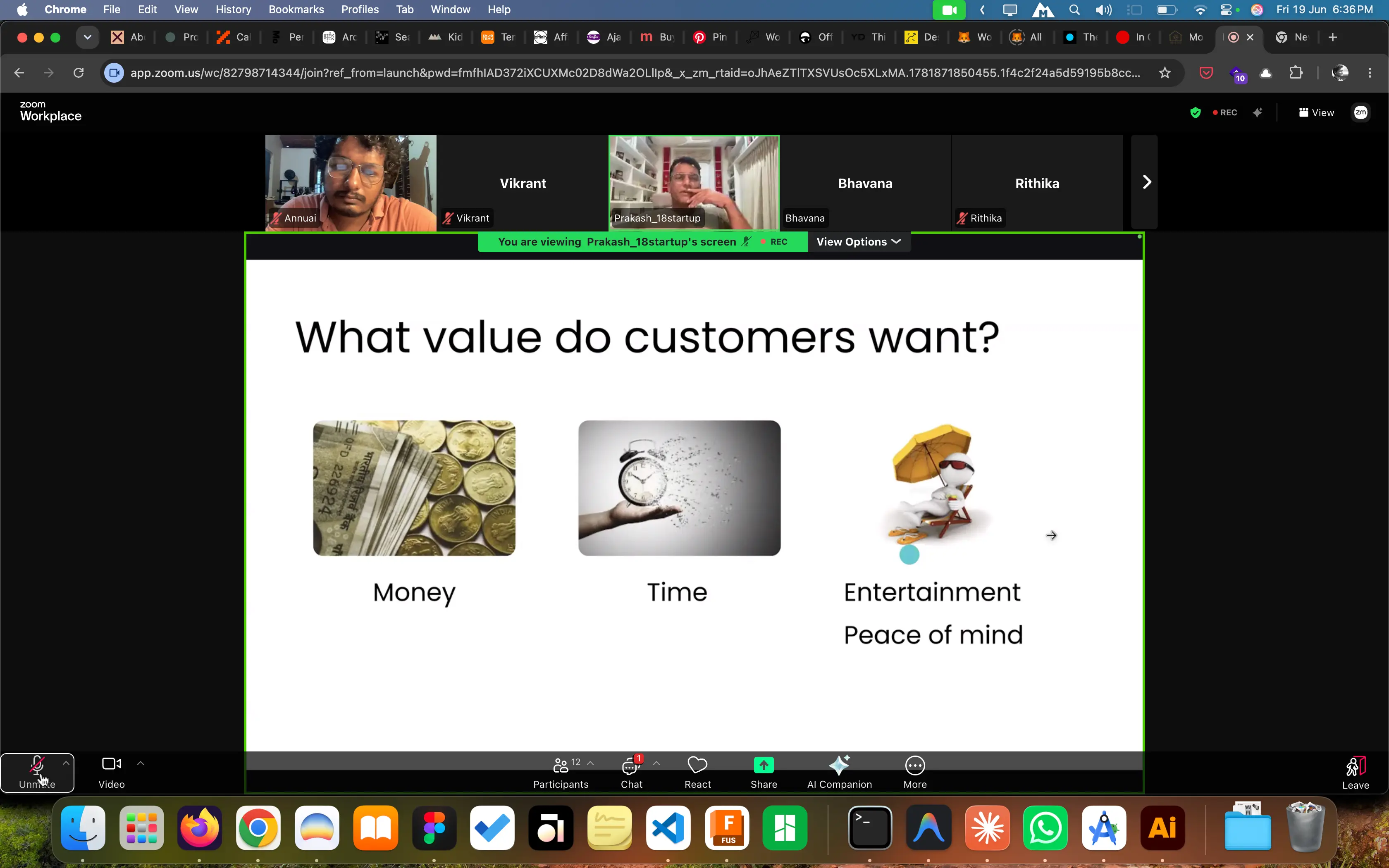
One of the most useful frameworks from the workshop was the breakdown of customer value.
According to the session, customers are generally looking for one of a few outcomes:
- Save money
- Save time
- Increase convenience
- Gain entertainment
- Achieve peace of mind
Looking at products through this lens was genuinely insightful. Every product eventually creates value in one or more of these dimensions.
When I think about Myto, I don't believe I'm saving riders huge amounts of money. I may not even be saving significant amounts of time.
What I am trying to create is convenience and peace of mind. Products that work reliably on long rides. Products designed by someone who actually rides motorcycles. Products that reduce friction during travel.
That is valuable. But is it ten times more valuable?
That's where things become difficult.
The problem with the 10x rule
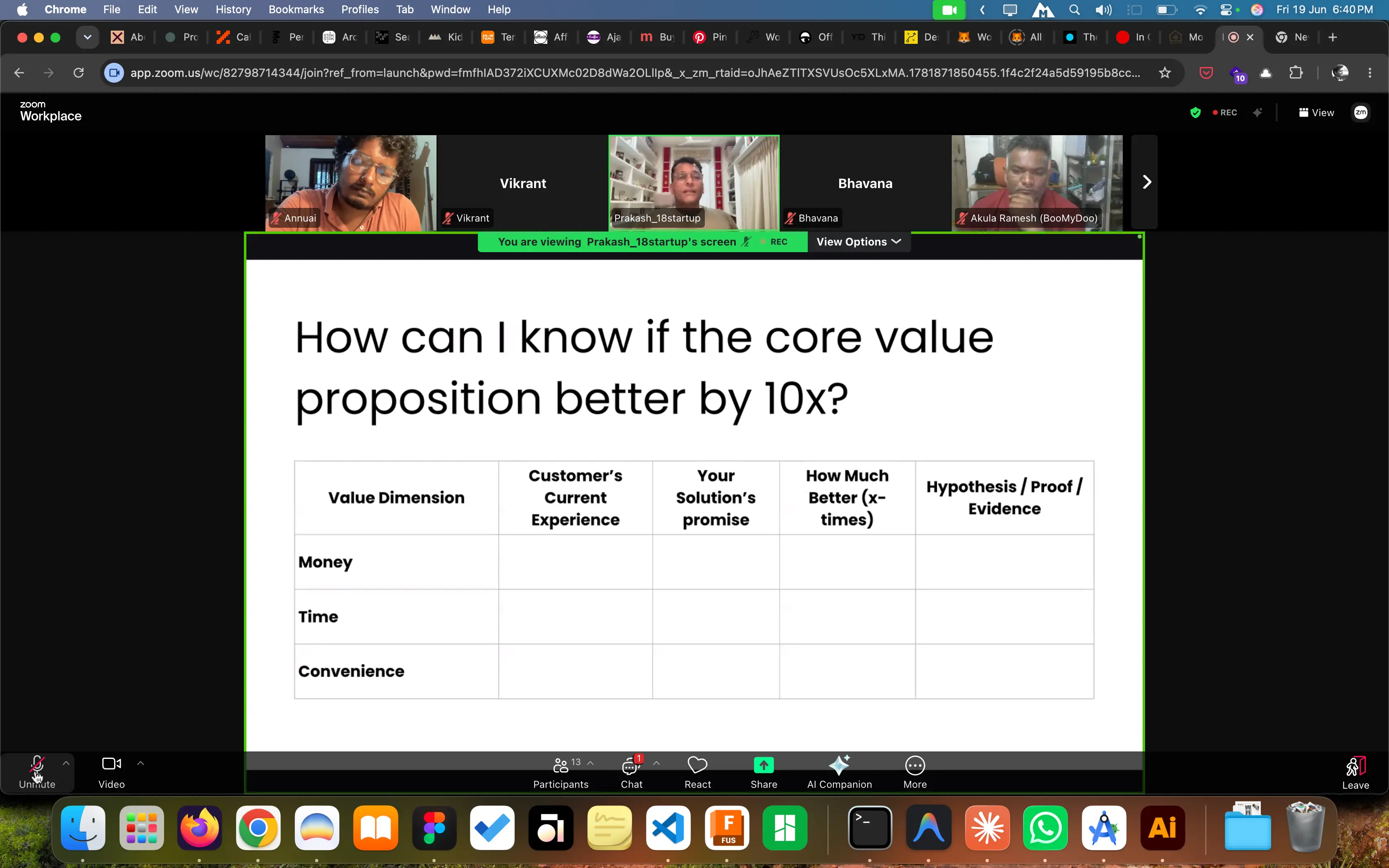
The workshop provided a framework to estimate whether your solution was ten times better than the current customer experience across different value dimensions.
This works well when the improvement is measurable.
If a software tool reduces a ten-hour task to ten minutes, the difference is obvious.
Physical products rarely work that way.
Nobody buys a Bellroy wallet because it is ten times better than another wallet.
Nobody buys a premium backpack because it is ten times better.
Nobody buys motorcycle accessories because they are ten times better.
People buy them because they are more thoughtful, better designed, more reliable, more beautiful, or because they trust the brand behind them.
These improvements are real. They influence purchasing decisions every day. Yet they are difficult to express as a multiplier.
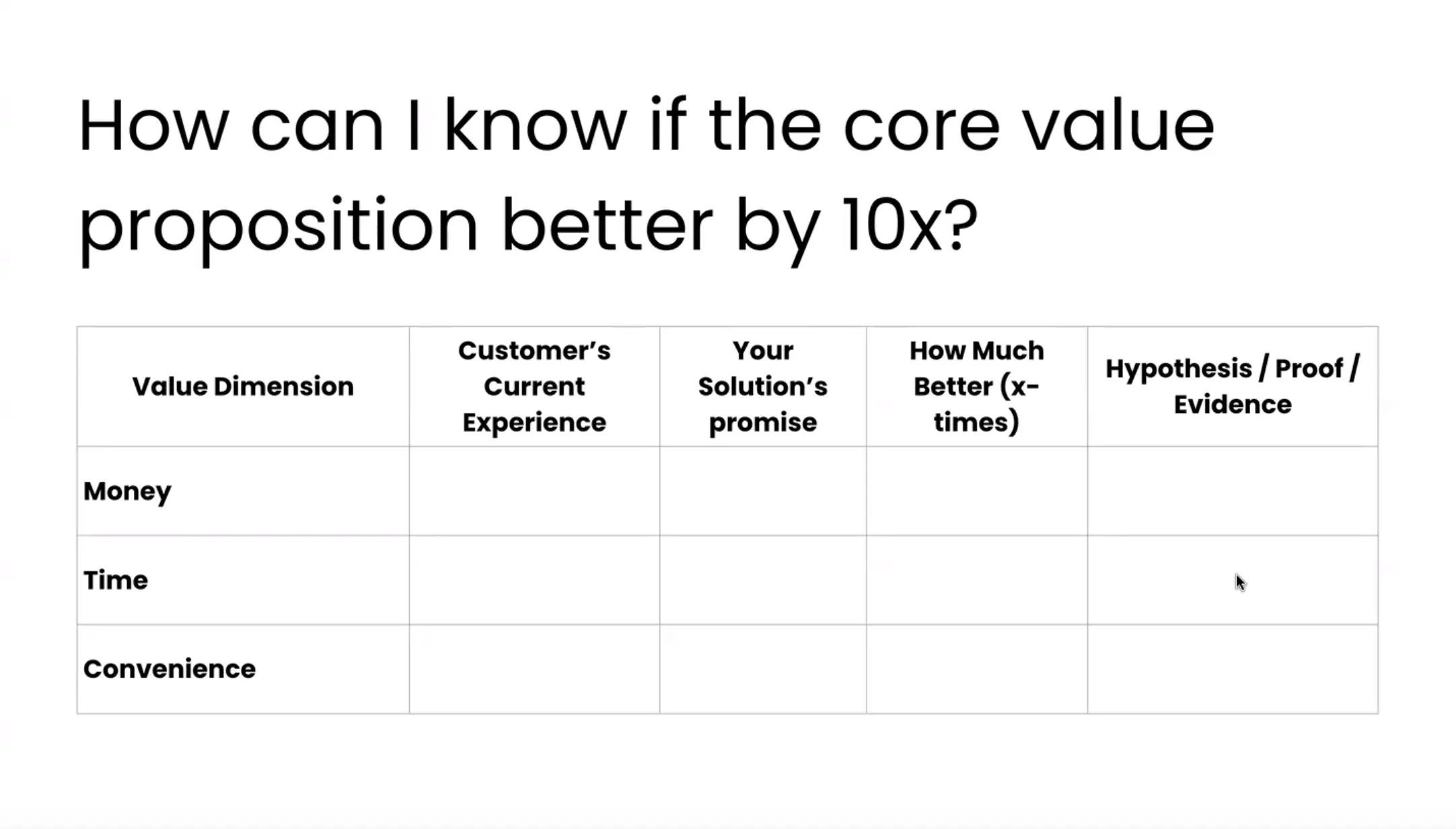
The workshop argued that your biggest competitor isn't another startup — it's the customer's comfort zone.
This is something I completely agree with.
Customers already have an existing experience. You're asking them to trust a new promise. Naturally, the promise has to be compelling enough to justify switching.
But I think the workshop makes a leap from "significantly better" to "ten times better," and that's where the framework starts becoming less useful for certain types of businesses.
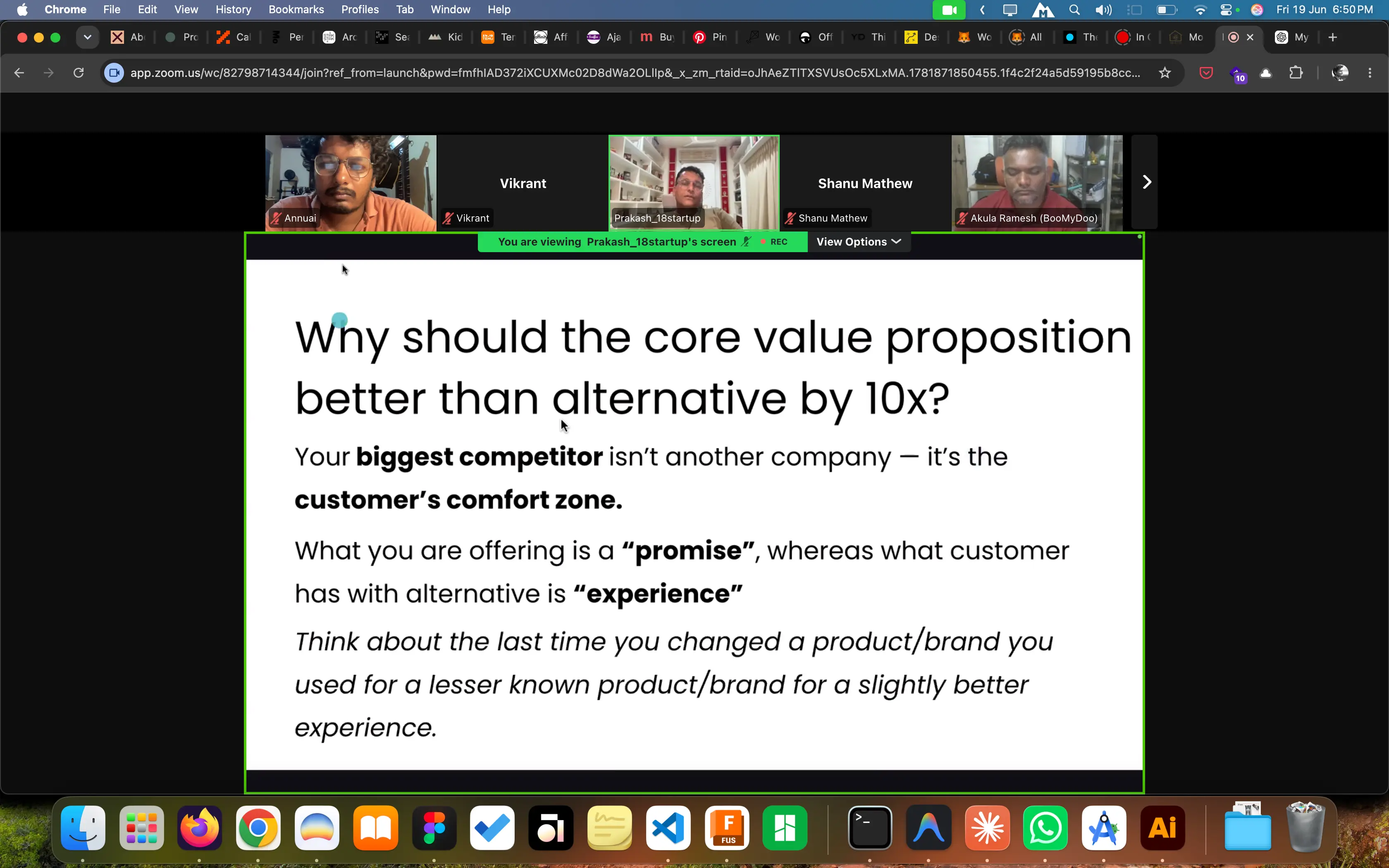
The scoring system itself was simple:
- 0 — Not significantly better
- 1 — 2x to 5x at MVP level
- 2 — 5x to 8x at MVP level
- 3 — 8x to 10x even with the MVP
The issue is that these numbers create an illusion of precision.
How do you objectively measure whether a motorcycle saddlebag is five times better?
How do you measure whether a toolkit provides eight times more peace of mind?
At some point, these scores become subjective judgments disguised as mathematics.
How big does a market need to be?
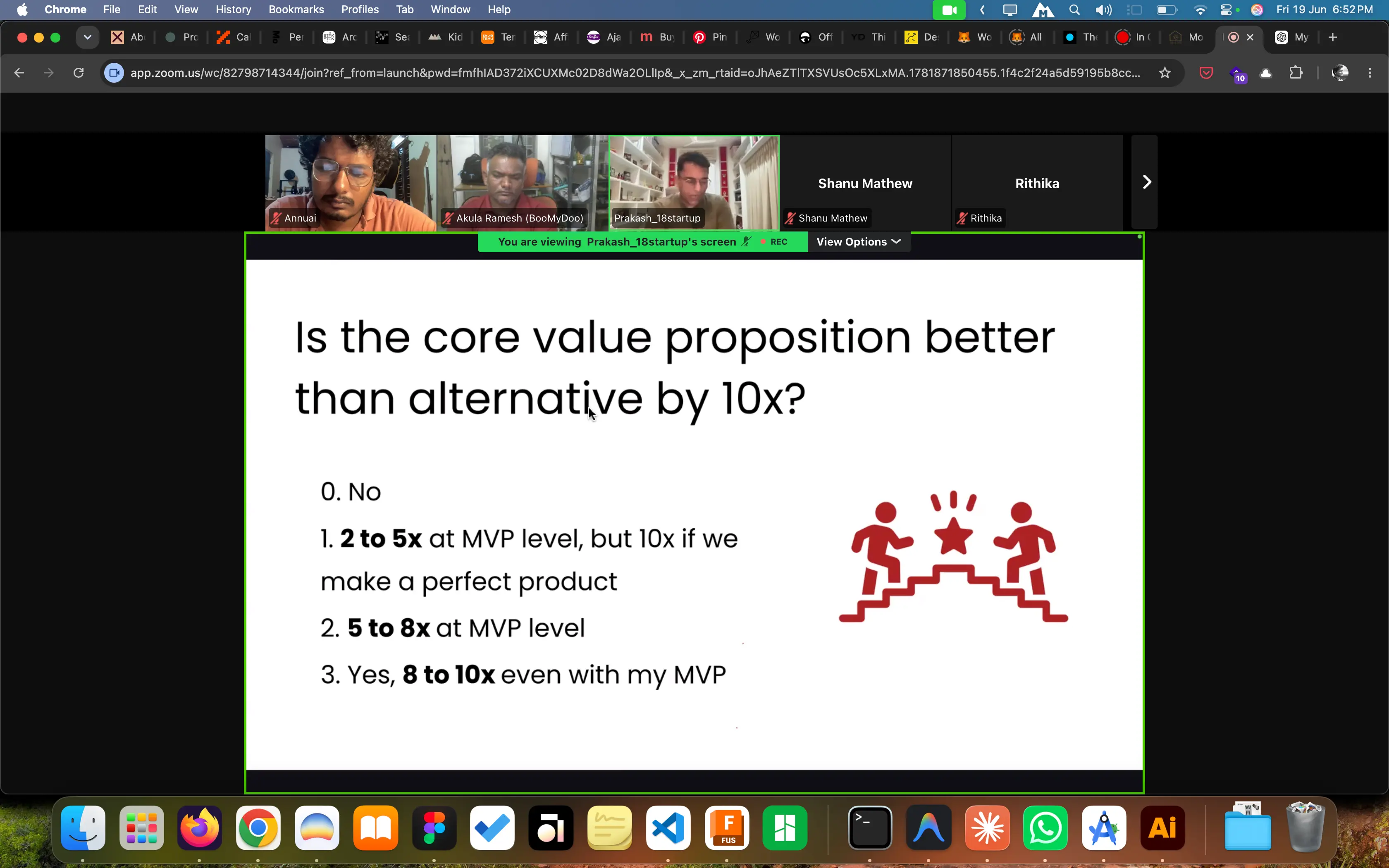
The next section focused on market size.
A market was defined as a group of people who share a common problem and are willing to pay to solve it.
That's a useful definition because it eliminates vanity metrics. A large audience means nothing if they don't actually have a problem worth paying to solve.
The workshop also defined market size as the total amount of money spent by those people annually.
Again, perfectly reasonable from an investor's perspective.
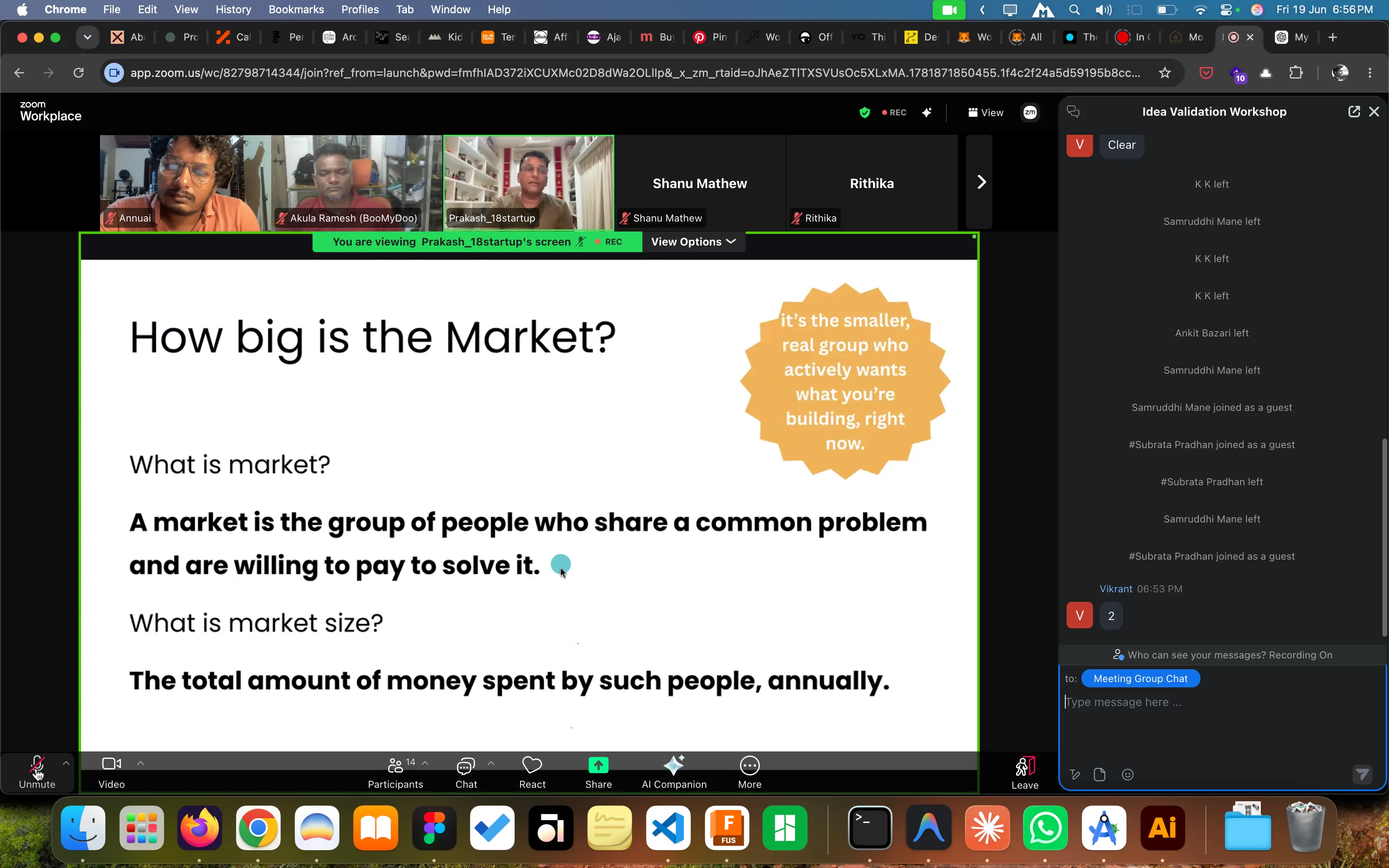
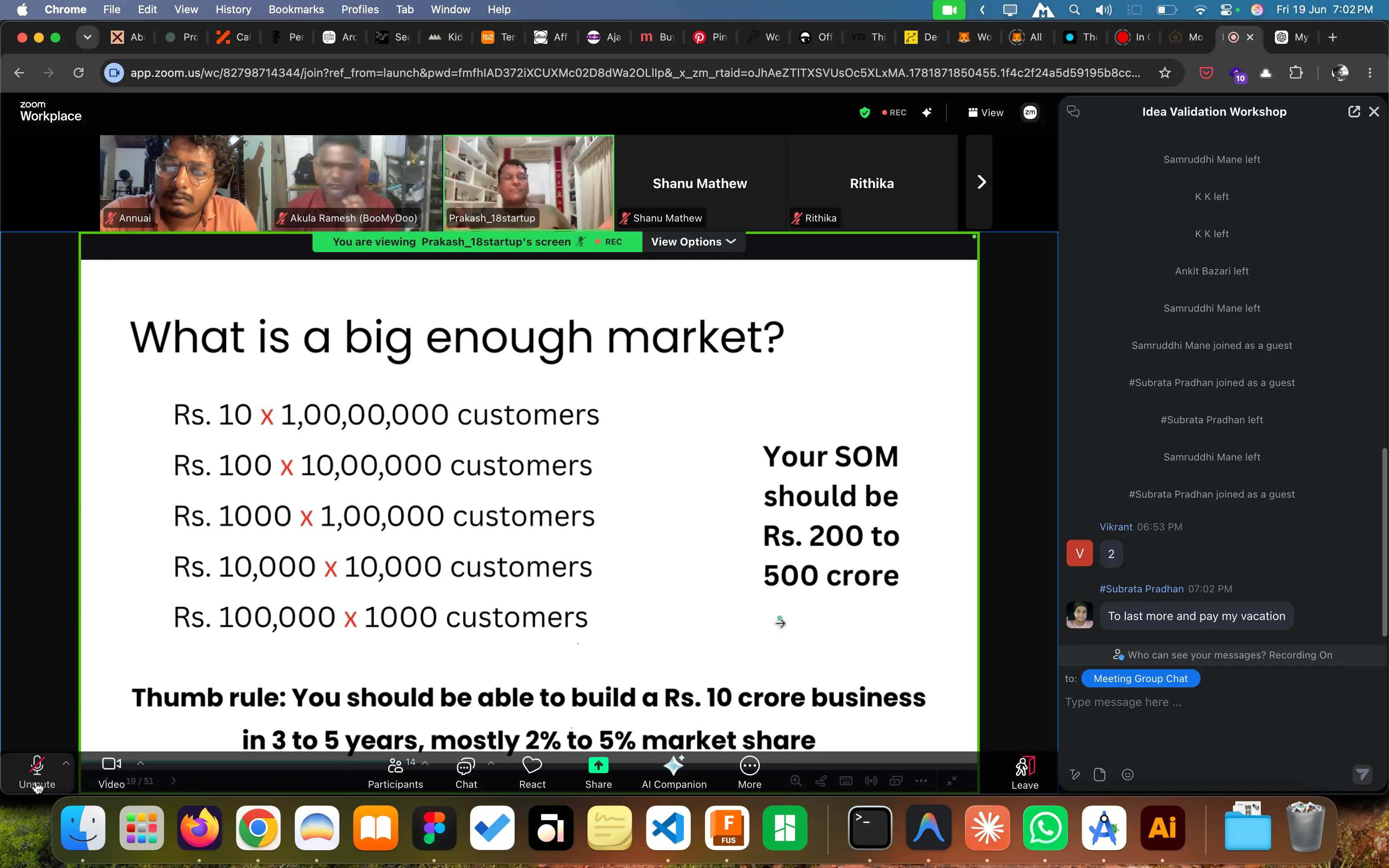
One of the slides suggested that a startup should be capable of building a ₹10 crore business within a few years and eventually operate within a serviceable obtainable market worth ₹200–500 crore.
This is where I found myself disagreeing with the framework.
Not because the math is wrong, but because it assumes every founder is trying to build a venture-backed company.
I am not.
Myto serves adventure riders and touring enthusiasts. That's a niche.
I don't need every motorcyclist in India to buy my products. I need a smaller group of riders who genuinely care about thoughtfully designed gear.
A niche market can build a meaningful business. It just may not build a unicorn.
The one category where I felt confident
The final category was buildability.
Do you have the money, time, skills, and resources required to build your minimum viable product?
Interestingly, this was the one area where I felt strong.
I have a workshop.
I have 3D printers.
I have product design experience.
I can prototype, test, iterate, and manufacture small batches.
The challenge isn't building products.
The challenge is finding the exact product that riders desperately want.
That realization alone made the workshop worthwhile.
My final score: 4 out of 243
At the end of the session, I calculated my final score.
Four.
According to the framework, a startup needs a score of at least 24 to qualify as venture investable.
If I had attended this workshop a few years ago, that number might have discouraged me.
Today, it had the opposite effect.
The workshop didn't tell me that Myto would fail.
It told me that Myto doesn't currently fit the profile of a venture capital-backed startup.
Those are very different conclusions.
A startup can be profitable without being venture investable.
A startup can create freedom without becoming a unicorn.
A startup can build a loyal community without dominating a market.
The biggest lesson I took away from this workshop wasn't the score.
It was understanding that startup advice is often optimized for investors, not founders.
Investors need businesses that can return entire funds.
Founders sometimes just need businesses that create meaning, independence, and a life they want to live.
I am not trying to build a unicorn.
I am trying to build products I believe in, for a community I understand, while maintaining ownership of the journey.
If that scores a 4 out of 243, I'm okay with that.