TRIZ & Structured Problem Solving
TRIZ is the Russian acronym for the “Theory of Inventive Problem Solving,” an international system of creativity developed in the USSR between 1946 and 1985 by engineer and scientist Genrich S. Altshuller and his colleagues.
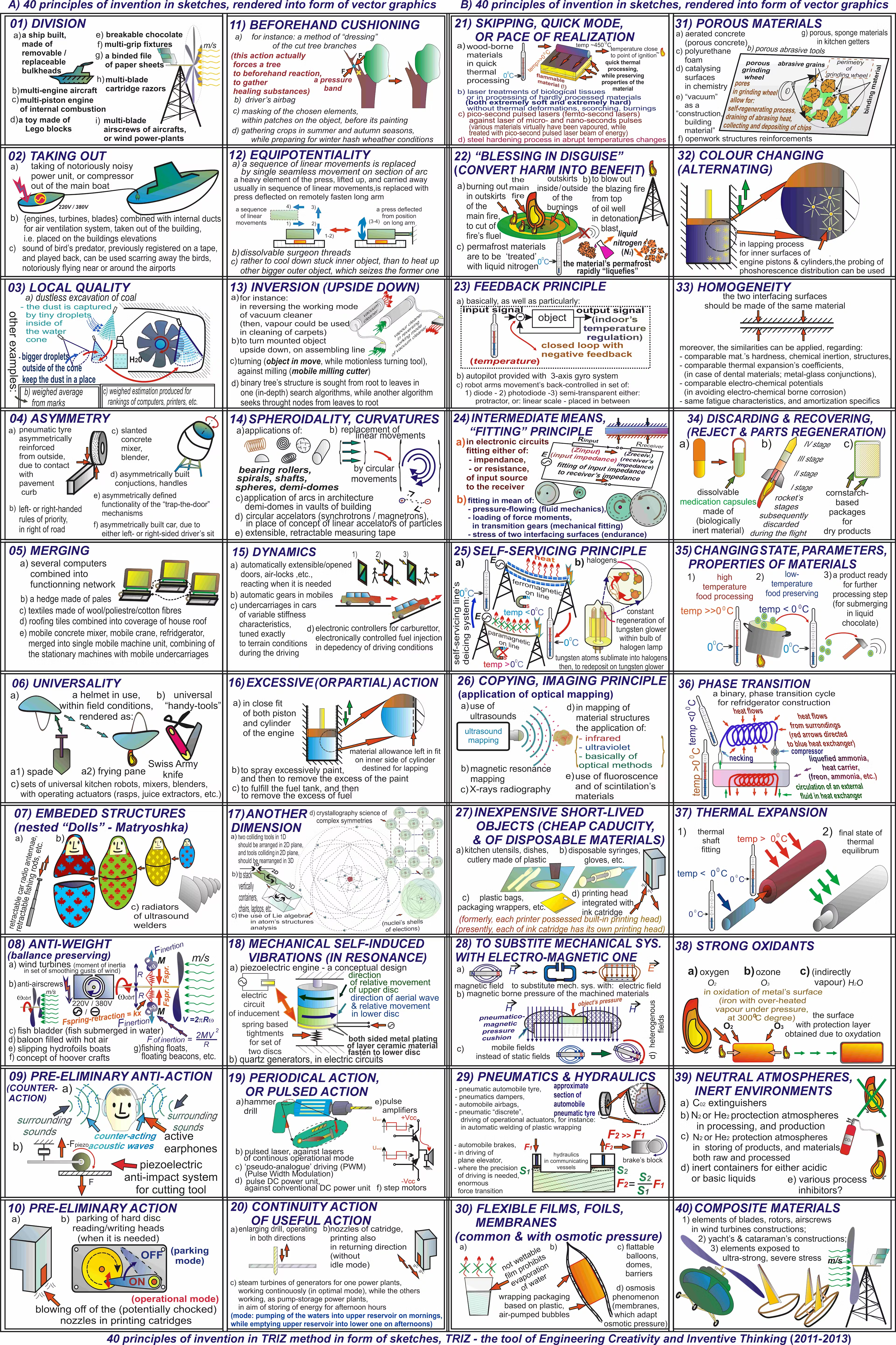

What makes TRIZ fascinating is its attempt to systematize innovation — treating invention not as random inspiration, but as something that can be analyzed, categorized, and reproduced through patterns.
- TRIZ — Introduction to the Theory of Inventive Problem Solving.
- TRIZ Contradiction Analysis — Understanding contradictions and inventive principles.
Process Improvement & Systems Thinking
- Six Sigma — Methodologies for process optimization and reducing defects.
- The House of Quality — A framework connecting customer needs with engineering requirements.
- Innovation Toolkit — A broad collection of innovation methods and strategic tools.
Case Studies & Applied Innovation
- Enabling Freedom for the Disabled in Developing Countries — A Core77 case study on the Leveraged Freedom Chair and frugal innovation.
- Engineering Reverse Innovations — How innovation emerging from developing economies reshapes global products.
Why These Interested Me
I’ve always been fascinated by the idea that innovation can be studied like a system instead of treated as pure luck or inspiration.
Frameworks like TRIZ, Six Sigma, and Quality Function Deployment show how engineering, design, constraints, and creativity intersect. A lot of these methodologies also reveal how some of the best innovations emerge not from abundance, but from limitations.