Hornbill Lamp — Where Nature's Geometry Meets Warm Light
The Hornbill Lamp draws from the striking silhouette of one of India's most dramatic birds — a creature whose casque, beak, and plumage have inspired artists for centuries. Here, that same organic geometry becomes a functional object that lives in your home.
This project started as a personal exploration into biomorphic form-giving — how the contours of the natural world can be translated into objects that serve everyday human needs without losing any of their original poetry. The lamp is both a functional light source and a quiet sculptural statement, designed to cast warm, directional light while standing on its own as an object worth looking at in the dark.
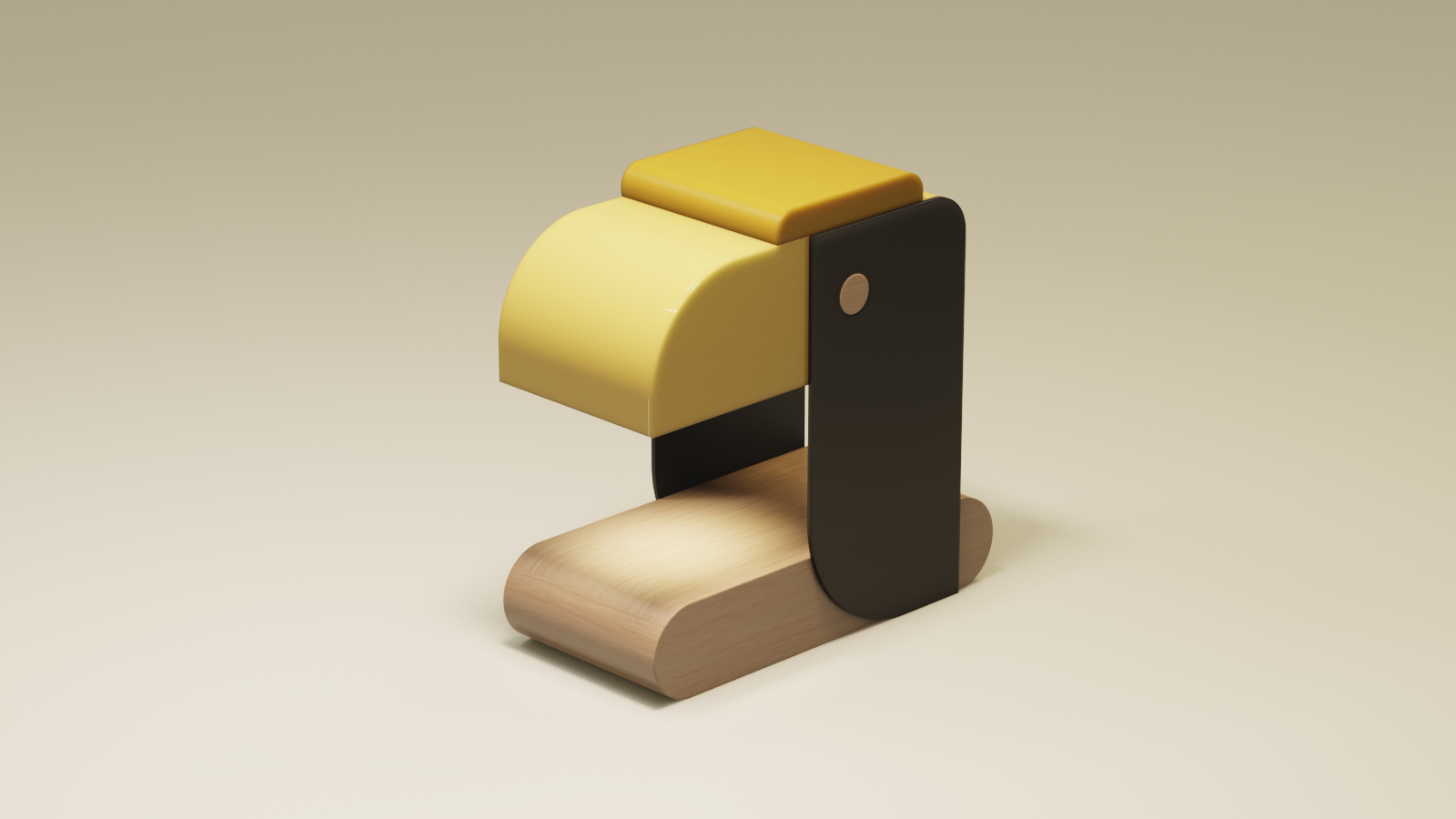
The final render of the Hornbill Lamp. The curved arm references the bird's long, arching neck, while the shade echoes the characteristic downward curve of its bill. Click any image to enlarge.
"Good design is not about imposing a human idea onto material — it is about listening to what the form already wants to become."
— Design Principle behind the Hornbill Lamp
Inspired by the Hornbill Bird
The Great Hornbill (Buceros bicornis) is one of the most architecturally striking birds in the world. Its casque — the hollow, bony protrusion above the bill — functions both as a resonating chamber and a visual display organ. This balance of utility and spectacle was the seed of the lamp's design language.
The lamp translates three key anatomical features: the bold downward curve of the bill becomes the shade profile; the long arching neck becomes the arm; and the casque's commanding presence becomes the visual weight at the top of the form. The result is a lamp that reads as unmistakably bird-like without resorting to literal imitation.
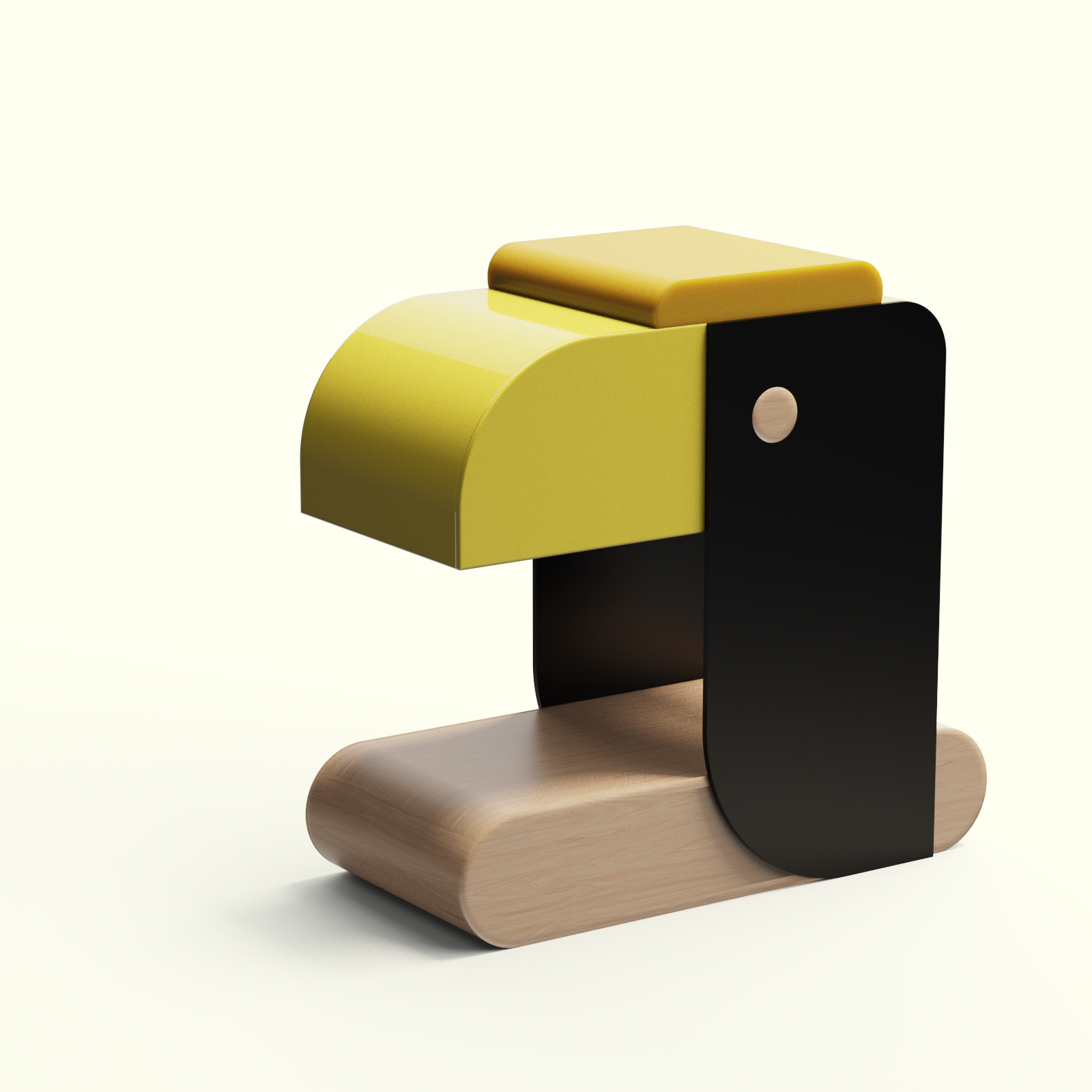
Early concept exploration — the first iteration, exploring the gesture of the bird's silhouette before refining proportions and material language.
A lamp that is as compelling switched off as it is switched on.
Warm, directional, and soft — suited for reading, ambiance, and accent use.
- Form derived from natural geometry, not applied ornament
- Stable base with minimum visual weight
- Shade that creates a glow, not a glare
- Manufacturable with standard fabrication methods
- Suitable for desktop and side-table placement
Design Process
Observation & Reference Gathering
Studied the morphology of the Great Hornbill — skeleton, plumage, posture, and movement. Sketched silhouettes and extracted the core gestural qualities that make the bird recognisable at a glance.
Form Abstraction & Sketching
Translated biological curves into lamp geometries. Multiple iterations explored how directly or loosely to reference the bird — the final form sits in a deliberate middle zone: suggestive but not illustrative.
3D Modelling & Proportion Studies
Modelled in Fusion 360. Proportions were dialled in by printing scaled maquettes and testing them in a real-world desk environment. The arm's sweep angle and shade depth were iterated several times.
Material & Finish Exploration
Explored matte ceramics, powder-coated metal, and resin composites for the shade. The prototype uses hand-finished gypsum for the shade body, with a steel rod arm and a weighted cast base.
Prototype Build & Light Testing
A functional prototype was assembled and tested with a 3W warm-white LED module. Light spill, beam angle, and ambient bounce off the shade interior were all measured against the original intent.
Concept Evolution
The first concept was bolder and more literal in its bird reference — almost totem-like. While interesting as sculpture, it sacrificed too much of the lamp's legibility as a functional object. The base was too wide and the shade too deep to cast useful light.
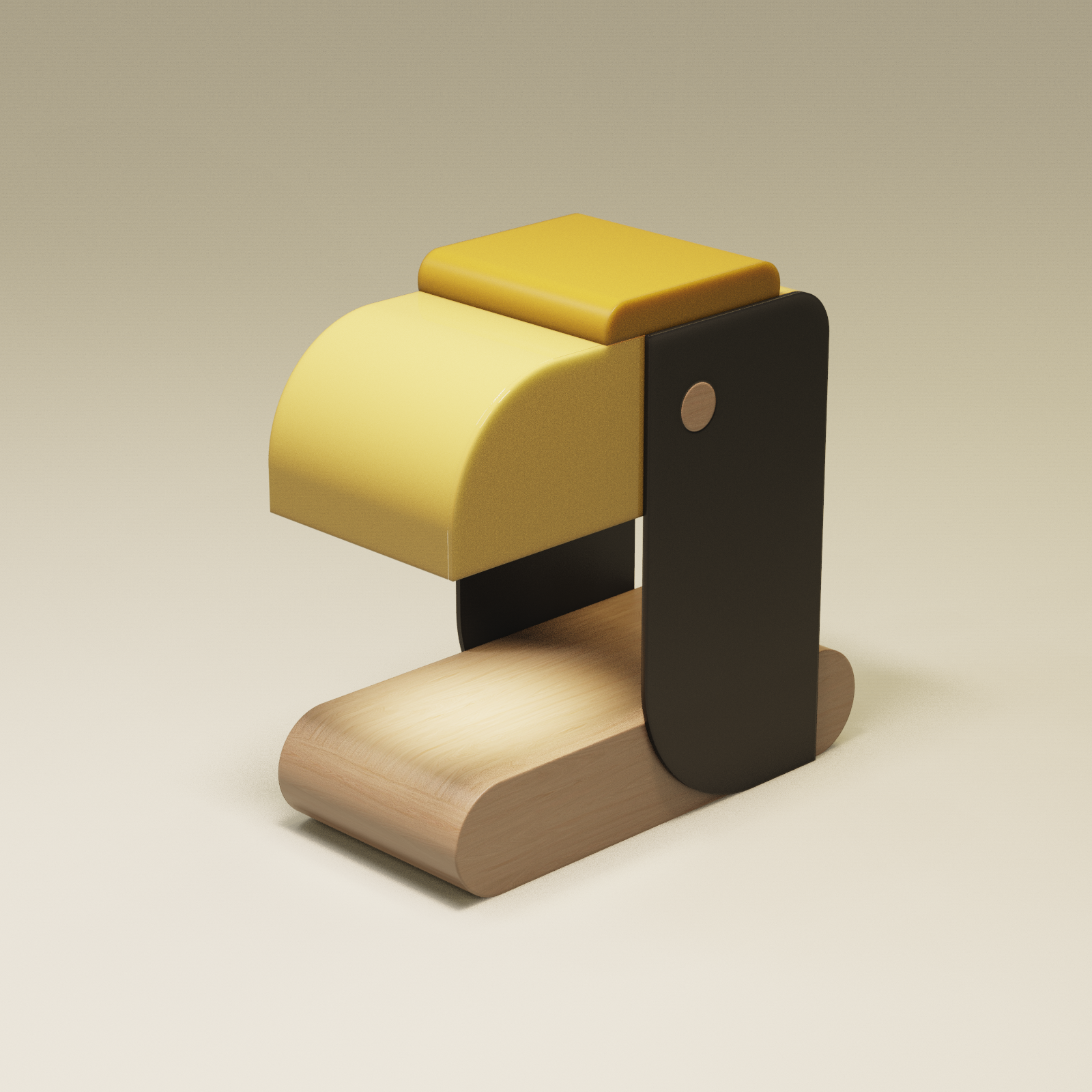
The final design is more refined and restrained. The arm is slimmer, the shade more open, and the base footprint is smaller — all changes driven by real-world usability tests. The bird reference survives in gesture rather than literal shape.
Prototype Photography
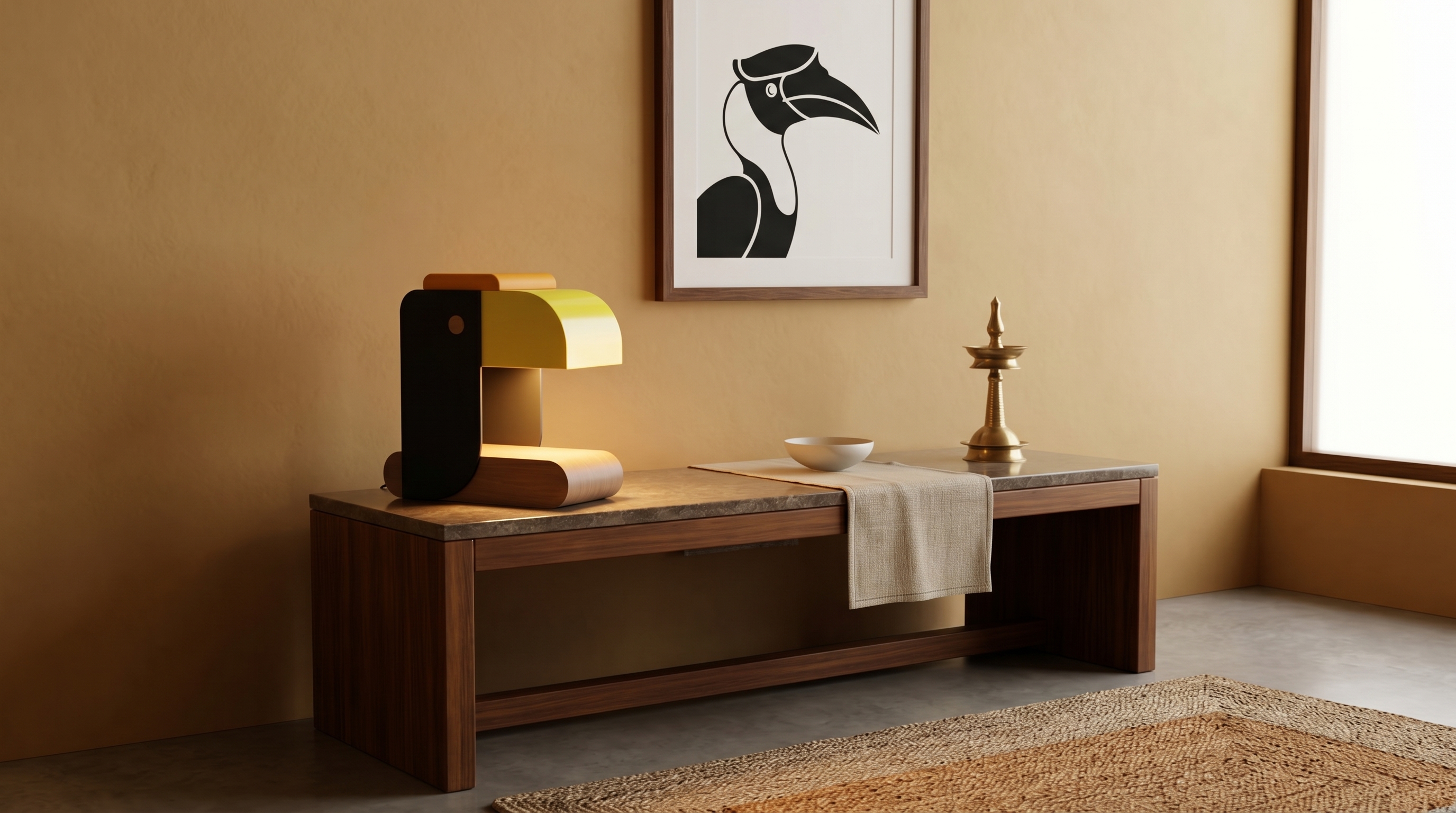
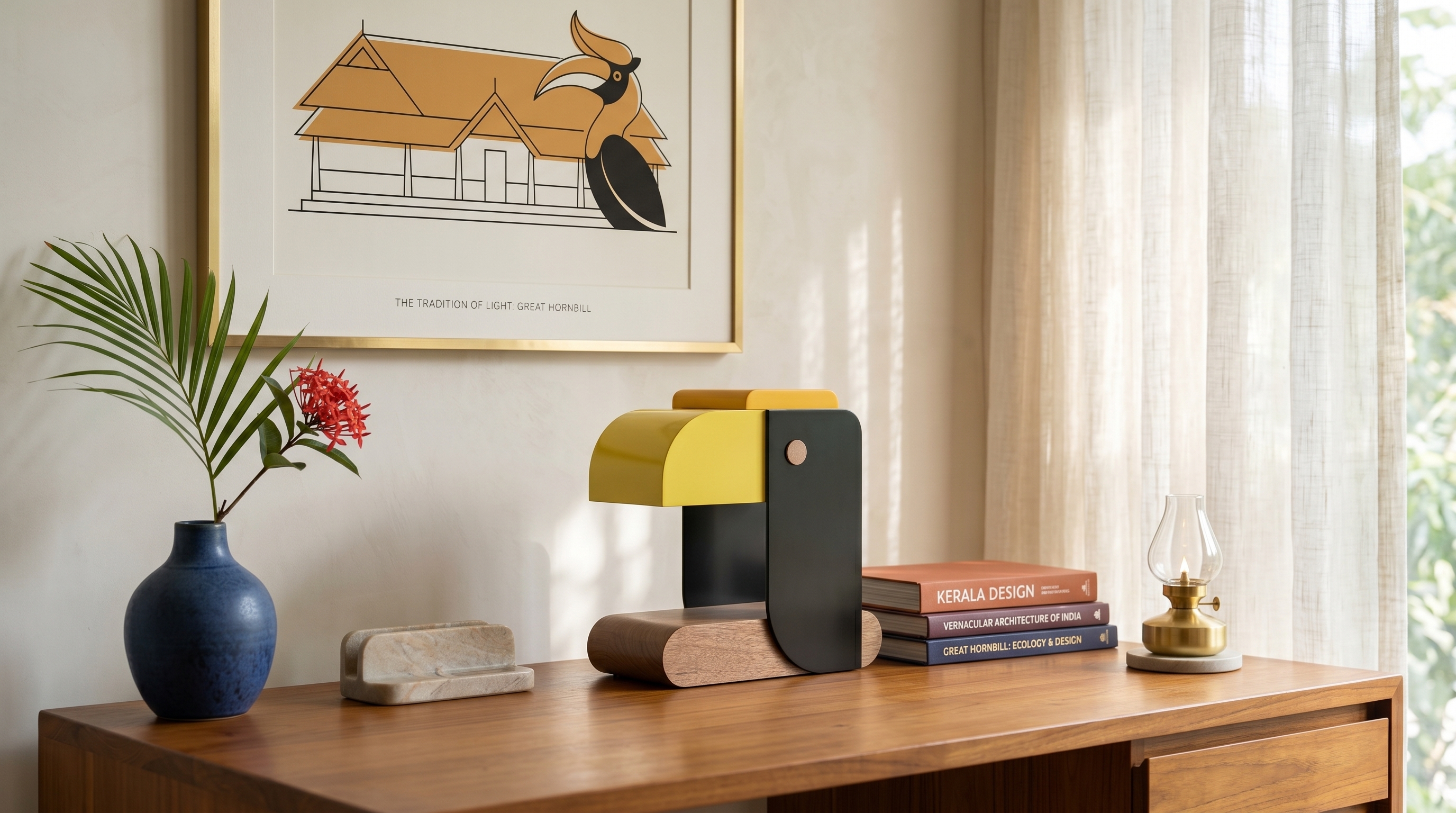
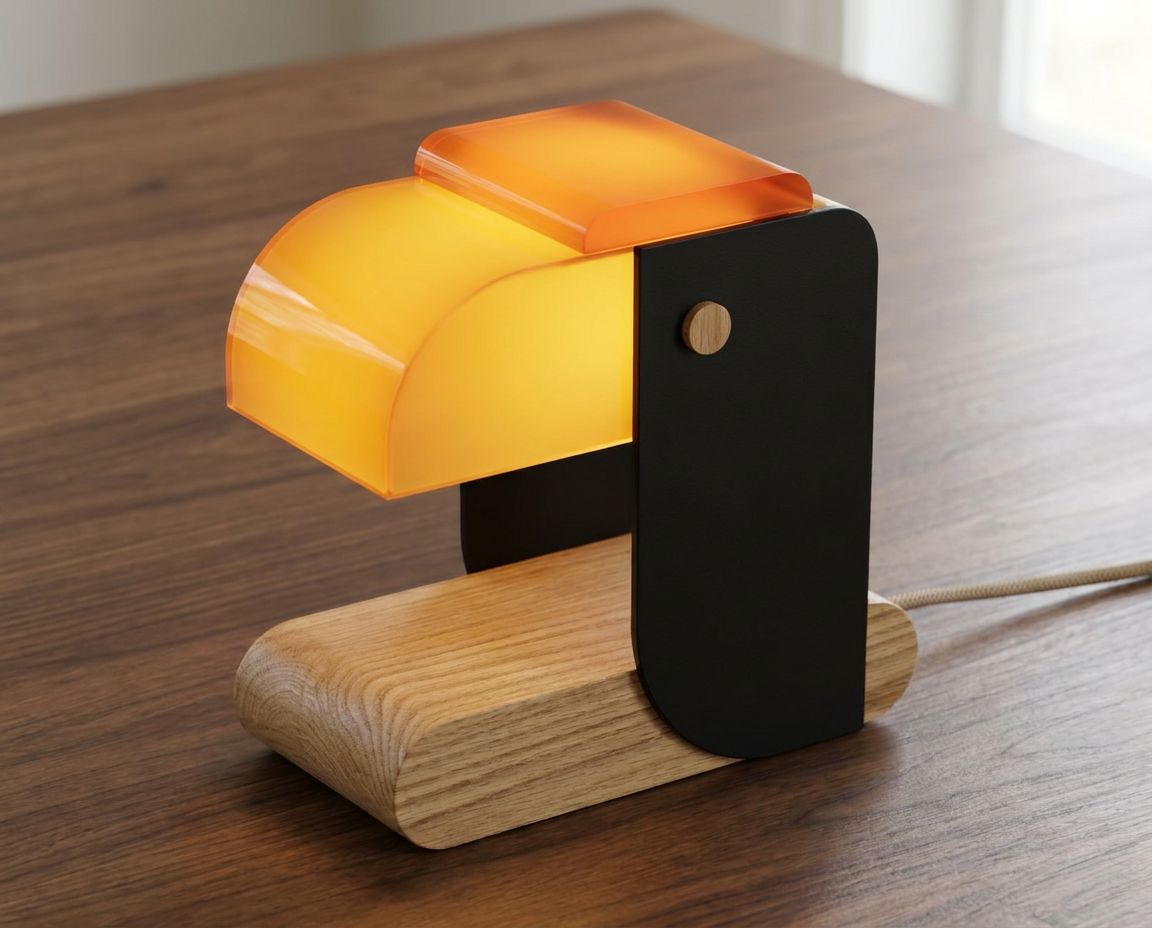
All prototype photographs shot in natural window light to best capture the lamp's true material quality and the warmth of its illumination. Hover over each image for notes, click to enlarge.
Reflections & Takeaways
Restraint in Biomorphic Design
Translating nature into product form requires deliberate editing. The first version was too literal — too bird-like. The lesson: extract the gesture, not the anatomy. Let users discover the reference, don't announce it.
Light as a Design Material
The shade's interior surface finish completely changes the character of the light. A matte interior creates soft, diffuse ambiance; a glossy one creates a sharper, more dramatic glow. Prototyping with real bulbs, not just 3D renders, is non-negotiable.
Proportion is Everything
The arm's length relative to the base width defines whether the lamp feels elegant or awkward. This was tested extensively by 3D printing at 1:1 scale and placing the maquettes in real contexts — something no render can fully replicate.
Stability Without Visual Weight
Getting the base heavy enough to counterbalance the arm without making it look like a doorstop was one of the harder problems. The solution was a low-profile, wide-footprint cast base with most of its weight concentrated at the outer rim.