Invnt 3D — Designing an inexpensive FDM 3D printing platform built for the curious beginner
Low-cost 3D printers are often badly designed for non-technical users. This project looks into developing a product for new enthusiasts interested in 3D printing without much technical knowledge — providing them a kickstart with a simple, thoughtfully designed machine.
Problem Statement
How do we design a versatile 3D printer platform with the less technically acquainted user in mind? How can the Indian context shape the machine? What is the scope of the audience for such machines in India, and how can design better cater to their requirements?
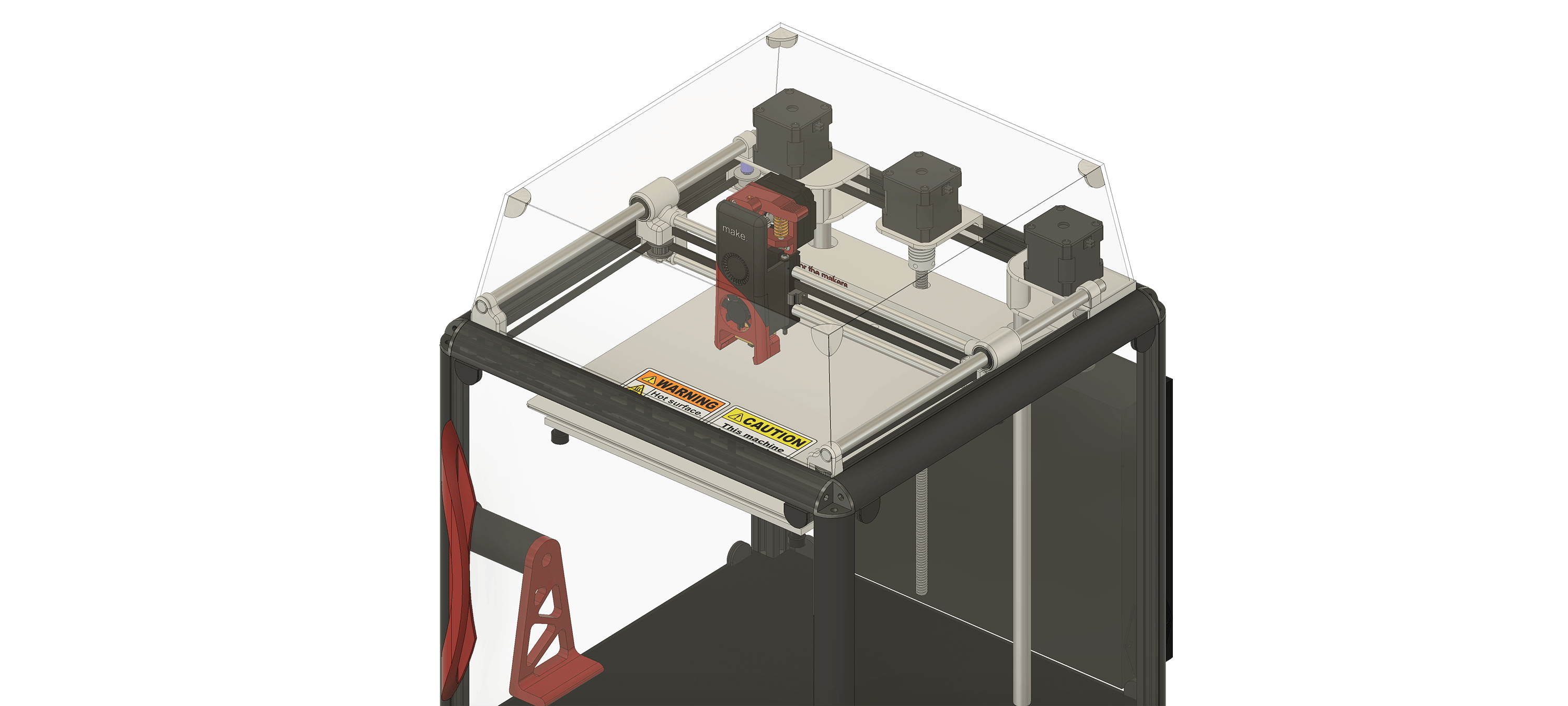
The final Invnt 3D render. A 3D printer will soon become a household appliance — this project explores what that future object should look and feel like. Click any image to enlarge.
"A 3D printer designed for curiosity — simple enough to use out of the box, open enough to grow with you."
— Design Principle behind Invnt 3D
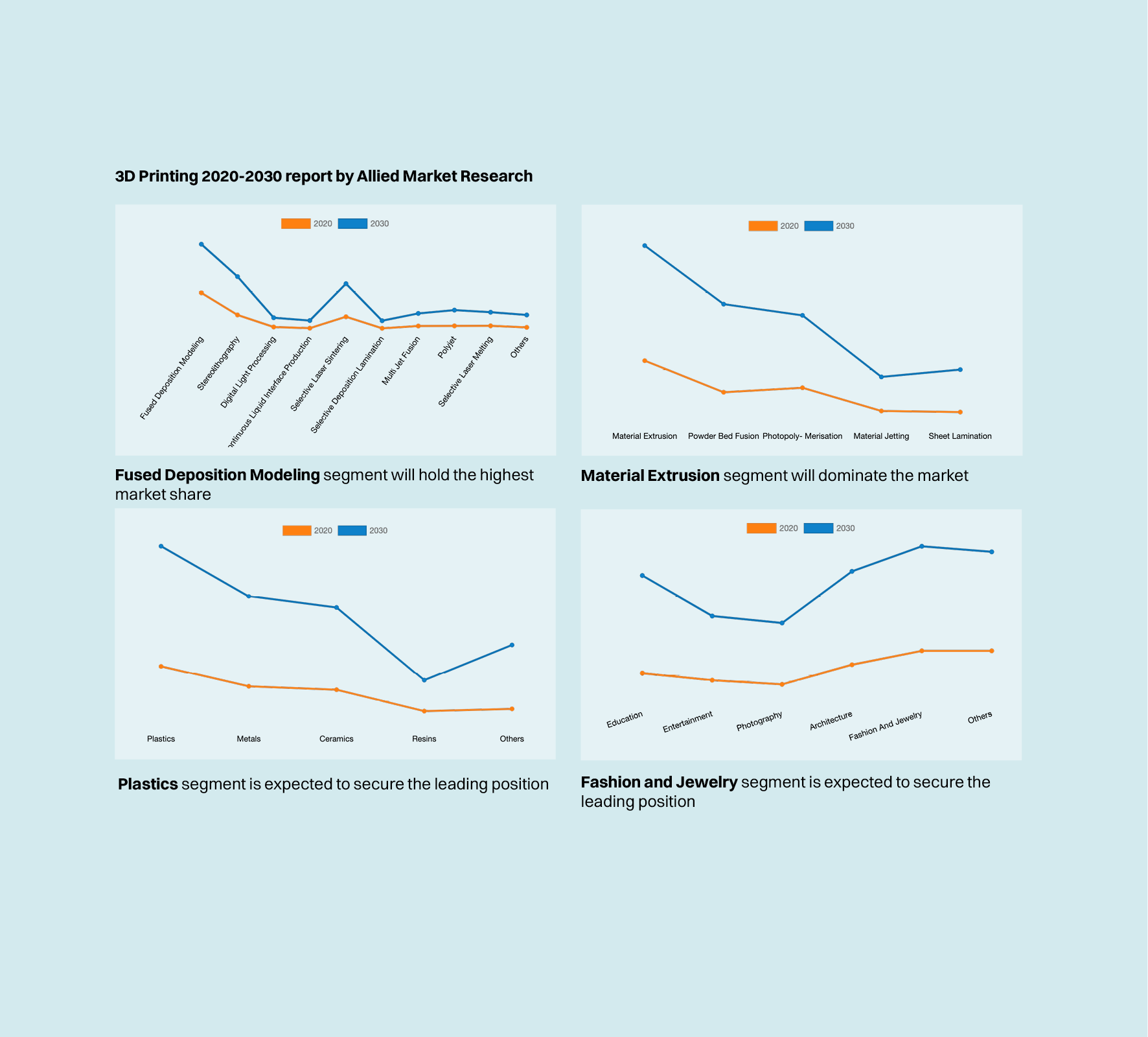
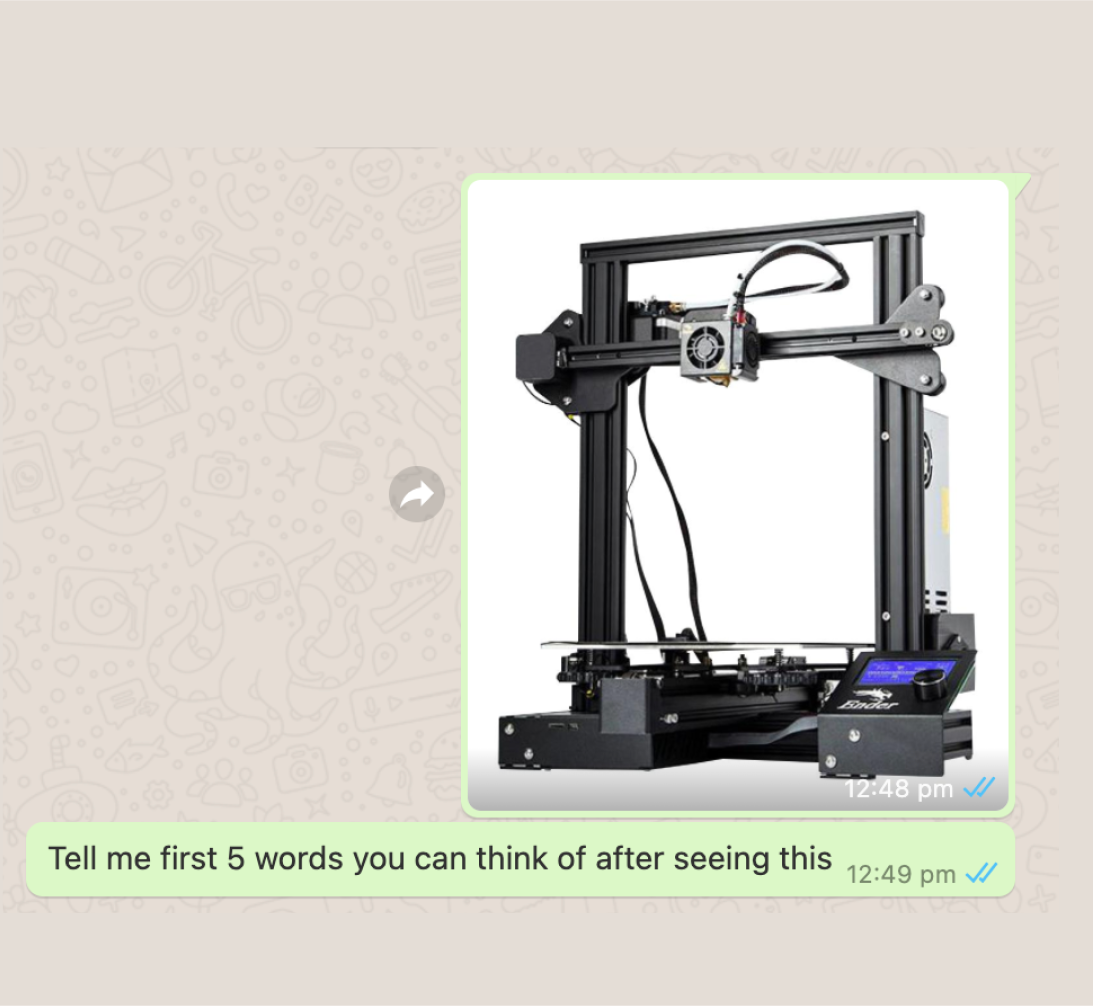
Studying the market revealed huge growth potential. The Ender 3 — a low-cost printer from Creality — dominated globally in just two years. The market is projected to grow 5× in 10 years.
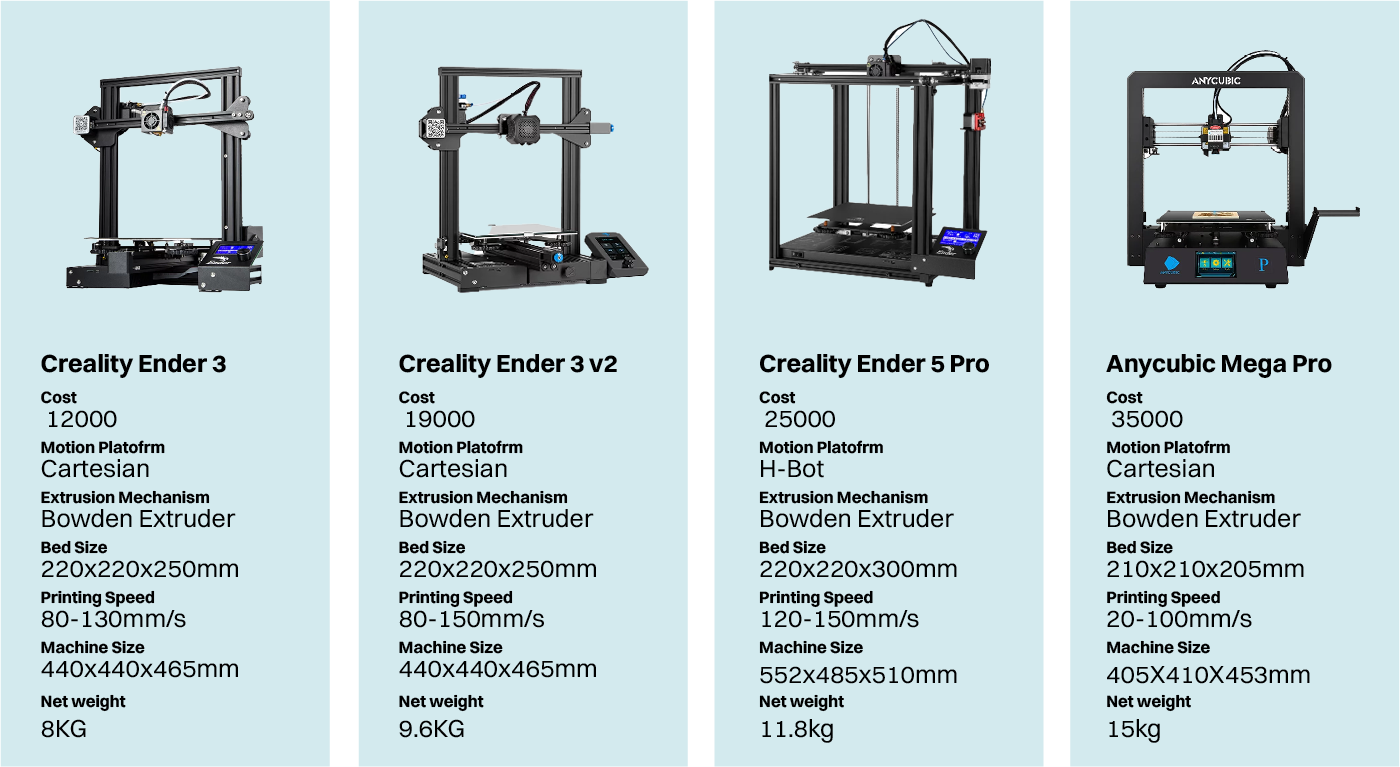
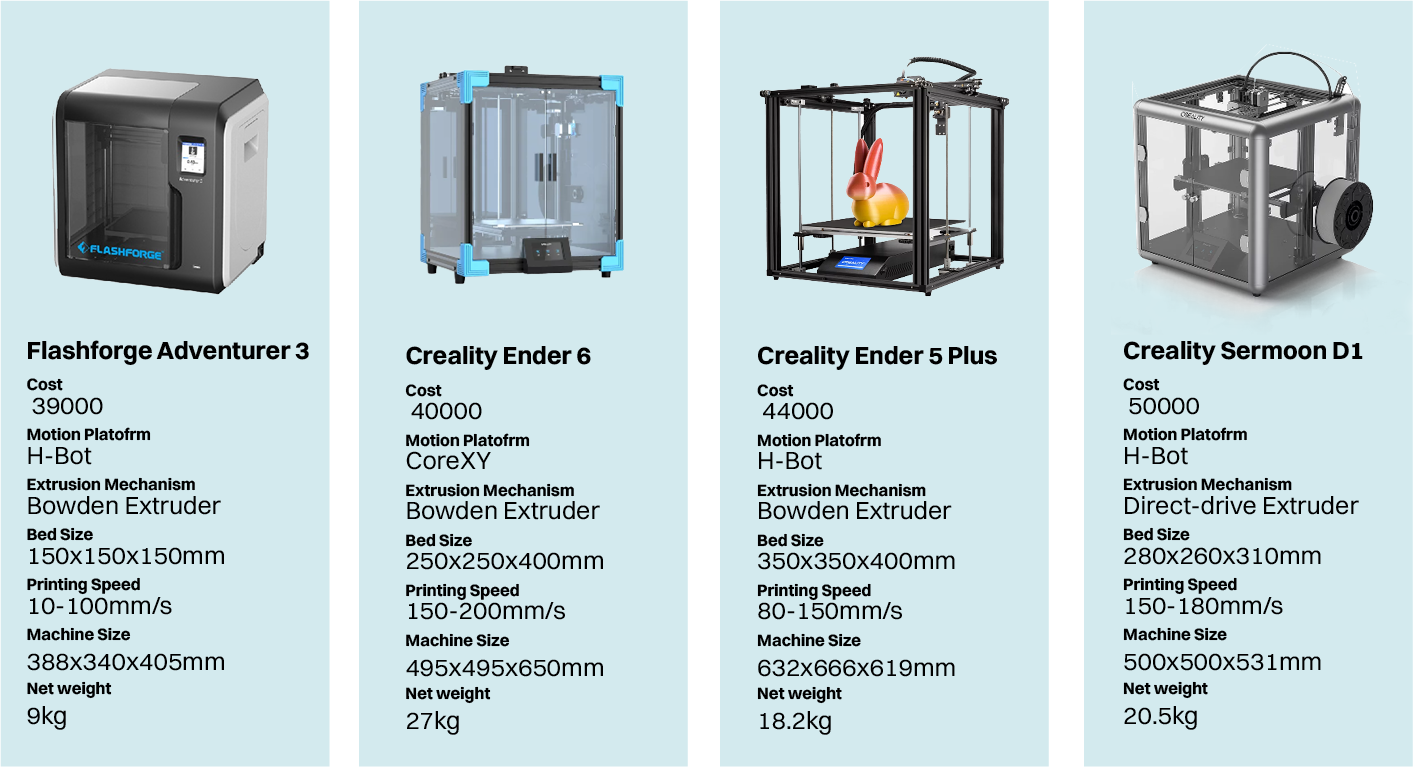
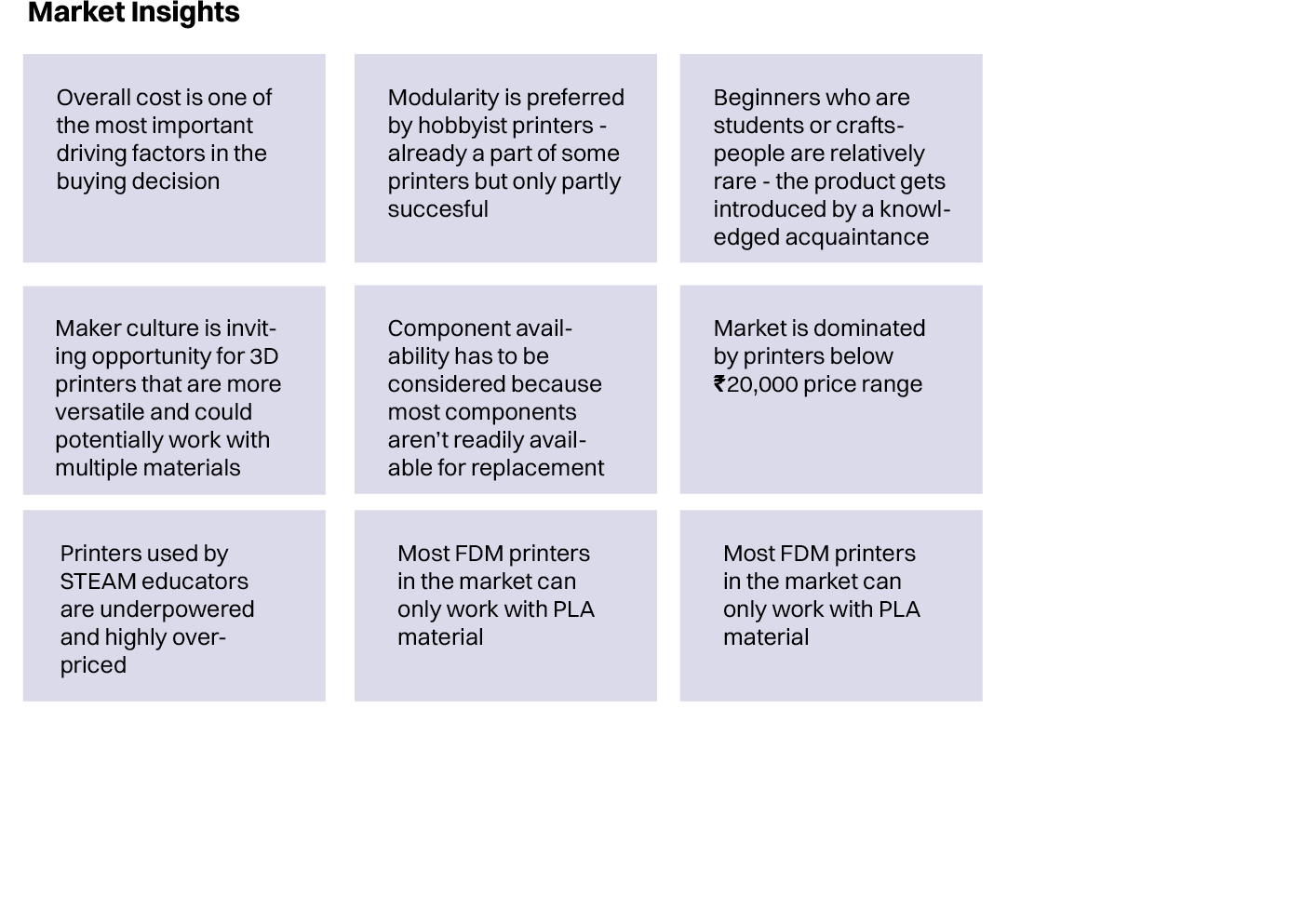
Market research mapped what sells today and what will sell in five years. The real challenge: building the better product now, before the market matures.
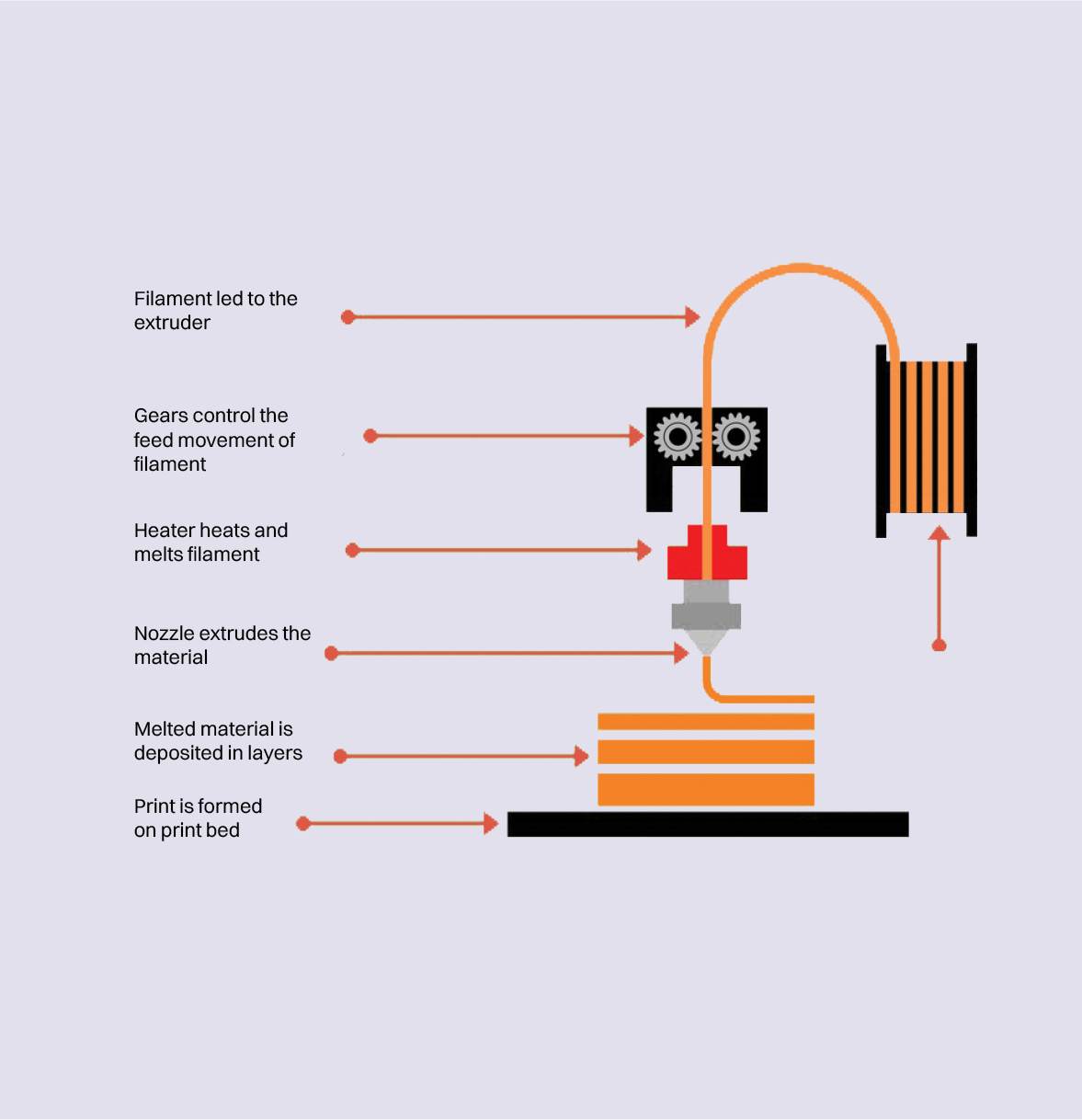
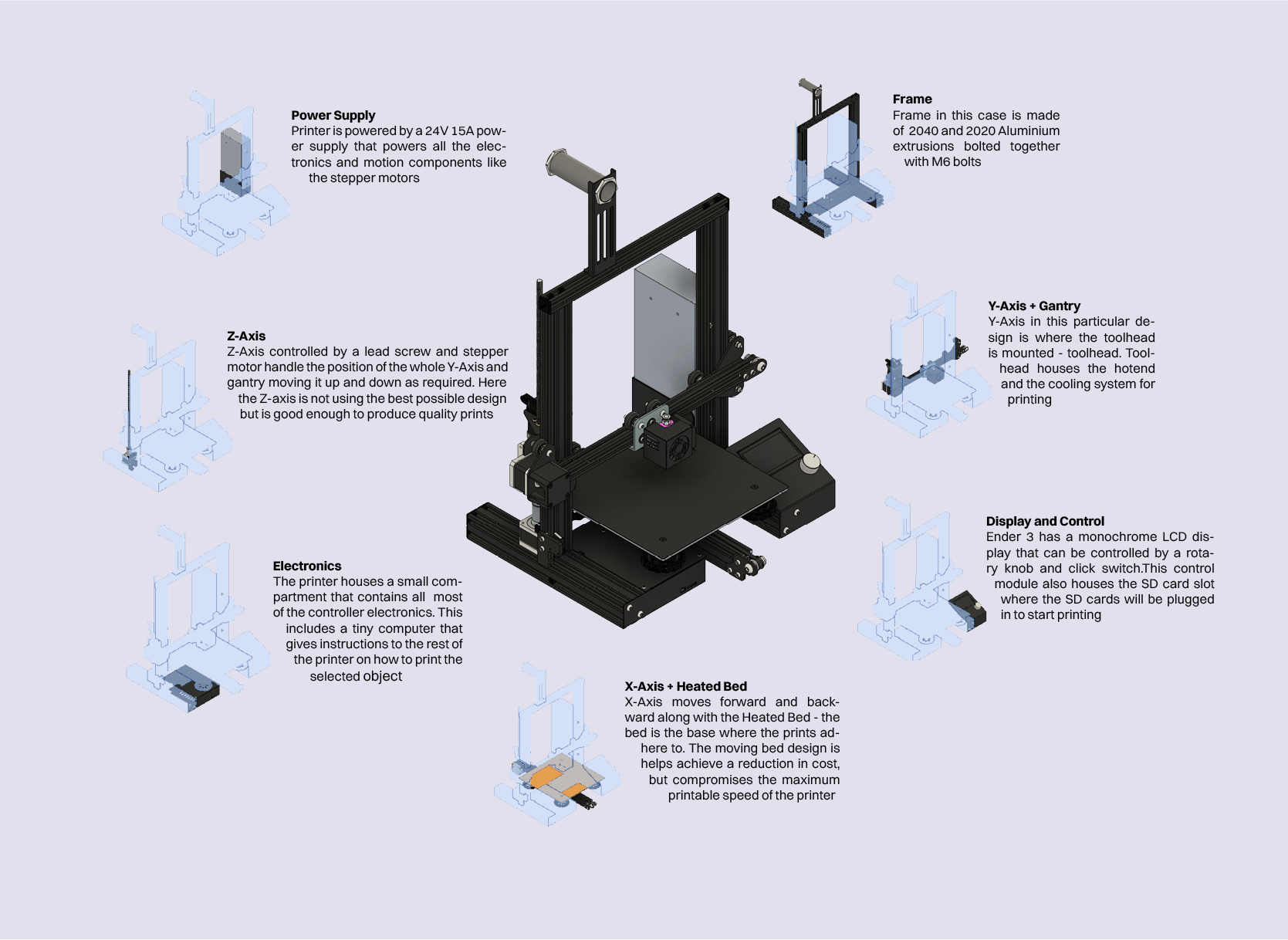
Fused Filament Deposition was studied in depth to understand the why's and why-not's — directly informing extruder system and motion platform decisions later in the project.
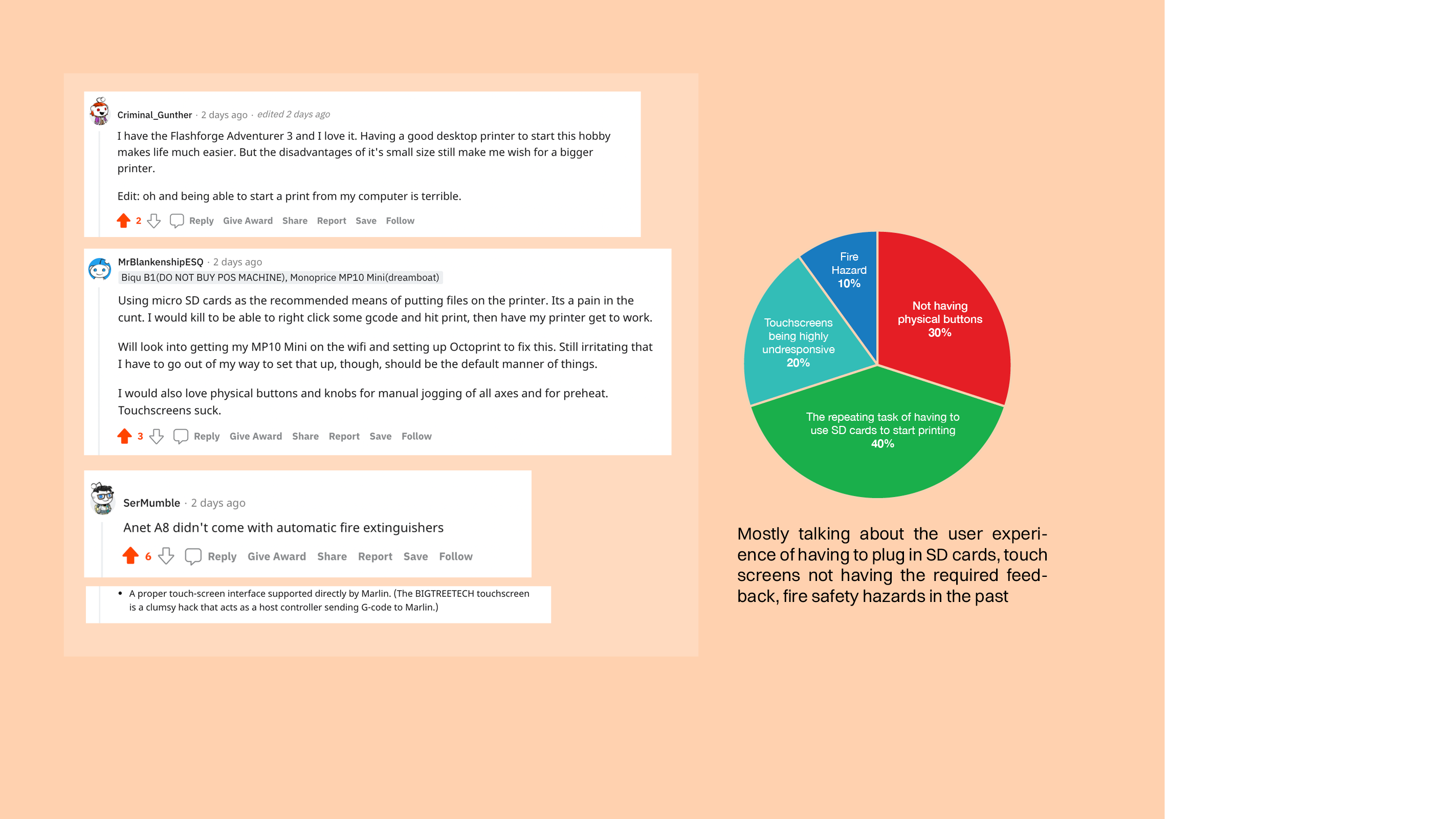
Develop a cost-effective CoreXY based highly extensible 3D printing platform with accessibility, maintenance and simplicity at the core.
Beginners, Hobbyists & Students
- Fit into a budget segment of ₹30,000
- Low-maintenance design
- Smart connectivity features
- Safety enclosure for toxic fumes
- No-noise operations design
Design Process
Market Research & Technology Study
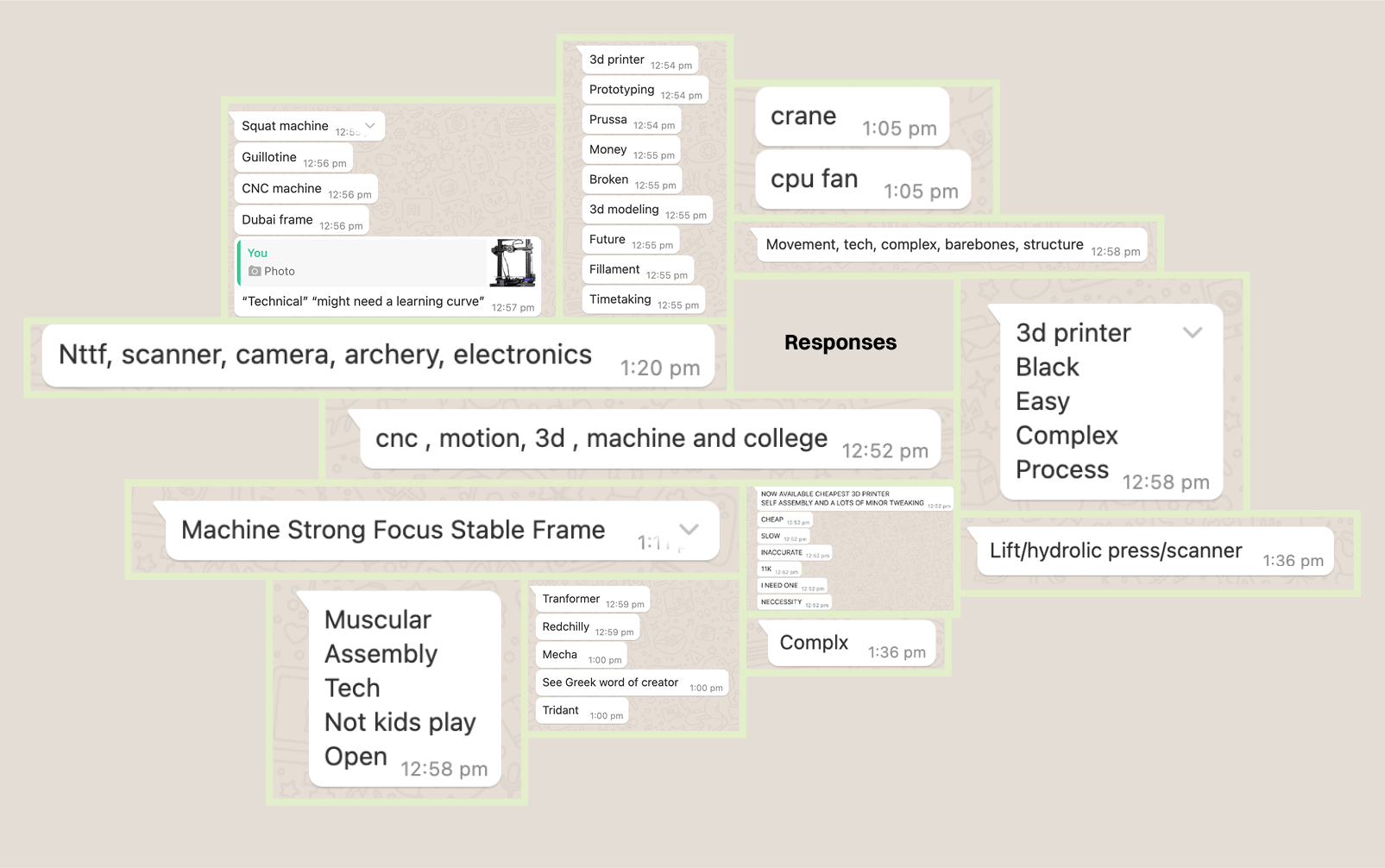
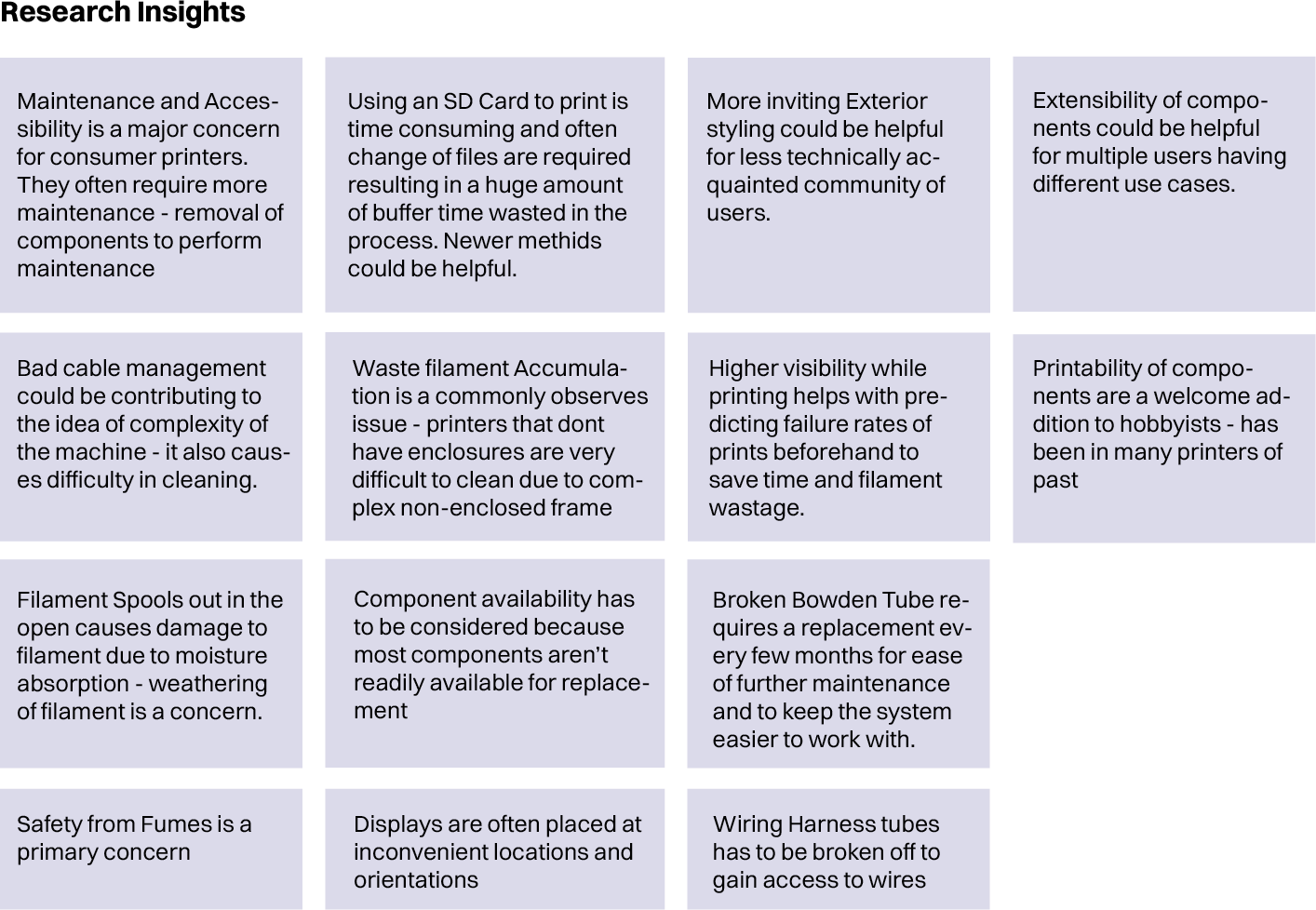
Studied FDM technology, competing products, and the Indian market trajectory. Identified that the 3D printing market would grow 5× in 10 years — and that the dominant products still failed non-technical users.
Problem Redefinition
Reframed the brief from cost-first to usability-first. Shifted focus to beginners and hobbyists who want to start making — not maintain a machine. The ₹30,000 Indian-market budget became a hard constraint rather than a compromise.
Architecture & Motion Platform
Selected CoreXY motion architecture for its speed-to-precision advantage within budget. Researched extruder systems and electronics to build a platform that could be upgraded without a complete rebuild.
Form & Enclosure Exploration
Explored enclosure forms balancing print visibility, fume containment, and DIY assembly. The aluminium extrusion frame with clear acrylic panels hit the right balance of open-access aesthetics and structural rigidity.
Fabrication & Assembly
Sourced all components from Indian retail suppliers, tapped and powder-coated aluminium profiles, and assembled the full prototype. Corner connectors and a custom shipping box were 3D-printed in-house.
Testing & Documentation
Ran print tests across materials and compiled a full indented Bill of Materials with tolerance callouts and assembly instructions — validating the ₹32,000 target and making the design reproducible.
Ideation & Prototyping
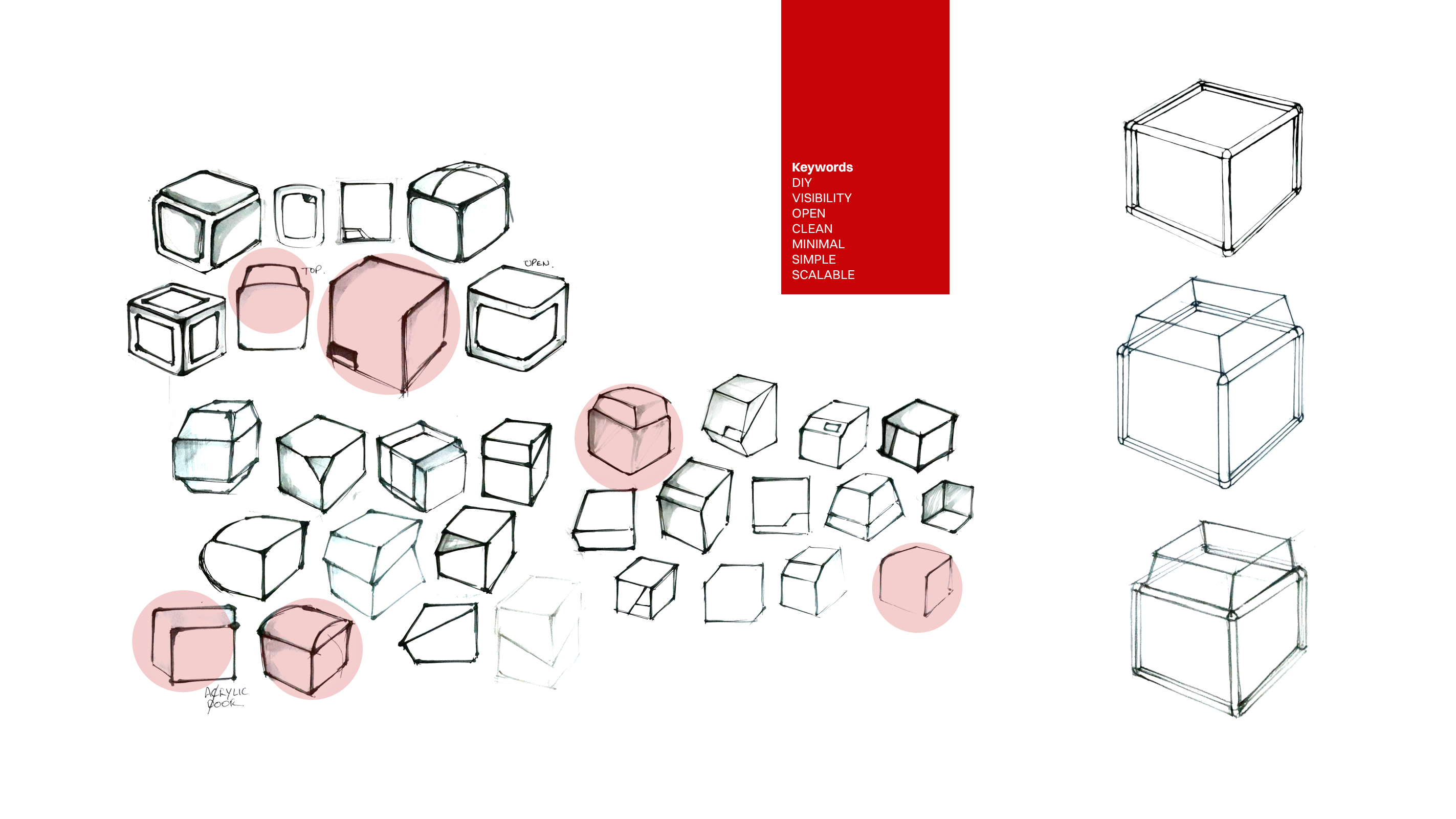
The simplest functional form that increases visibility, maintains DIY capabilities, and stays functional while being aesthetically pleasing. The final direction: 2020R aluminium extrusion profiles for the frame, clear acrylic for the enclosure.
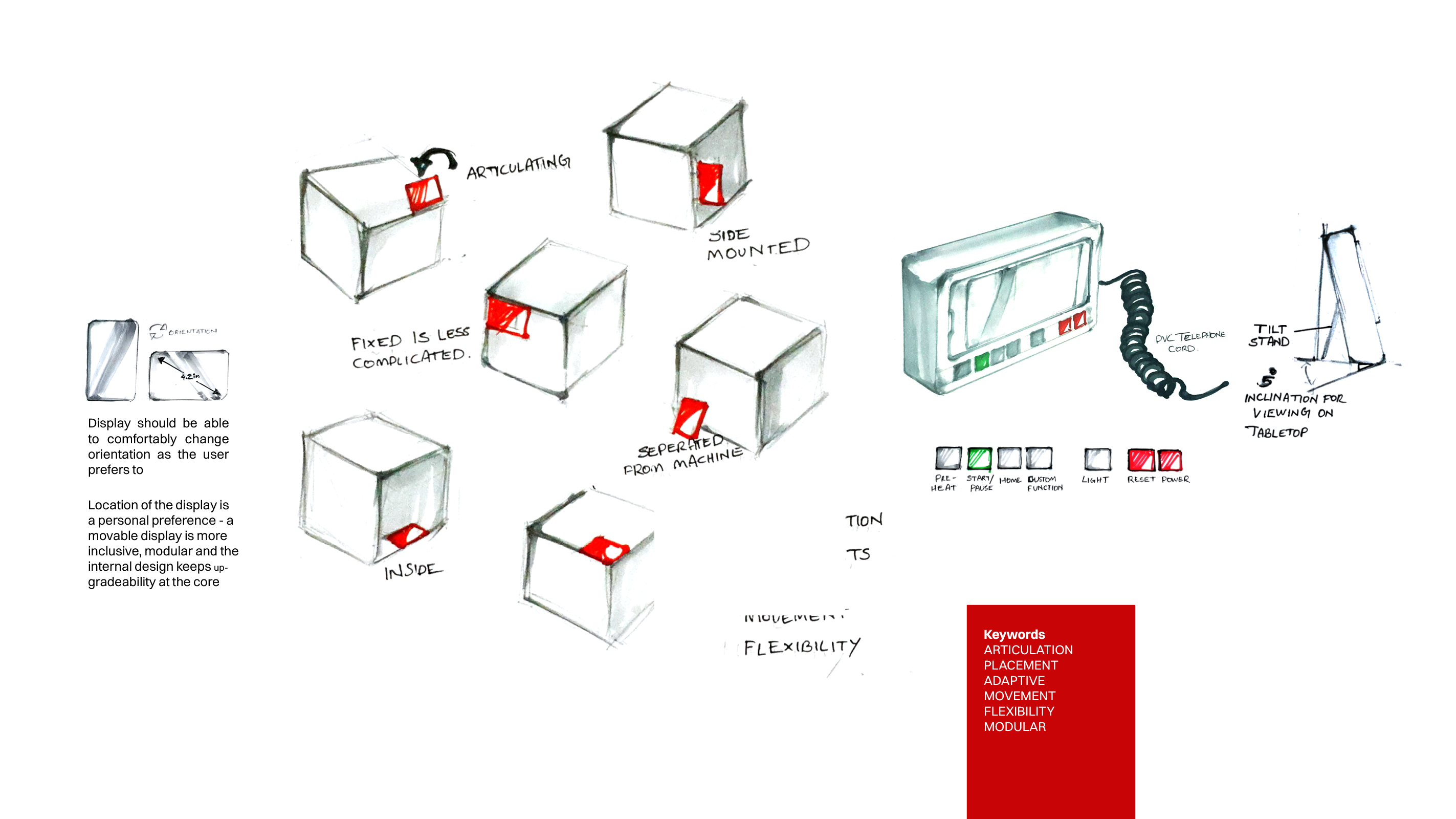
Display should be able to comfortably change orientation as the user prefers.
Location of the display is a personal preference — a movable display is more inclusive, modular, and keeps upgradeability at the core.
Final Product
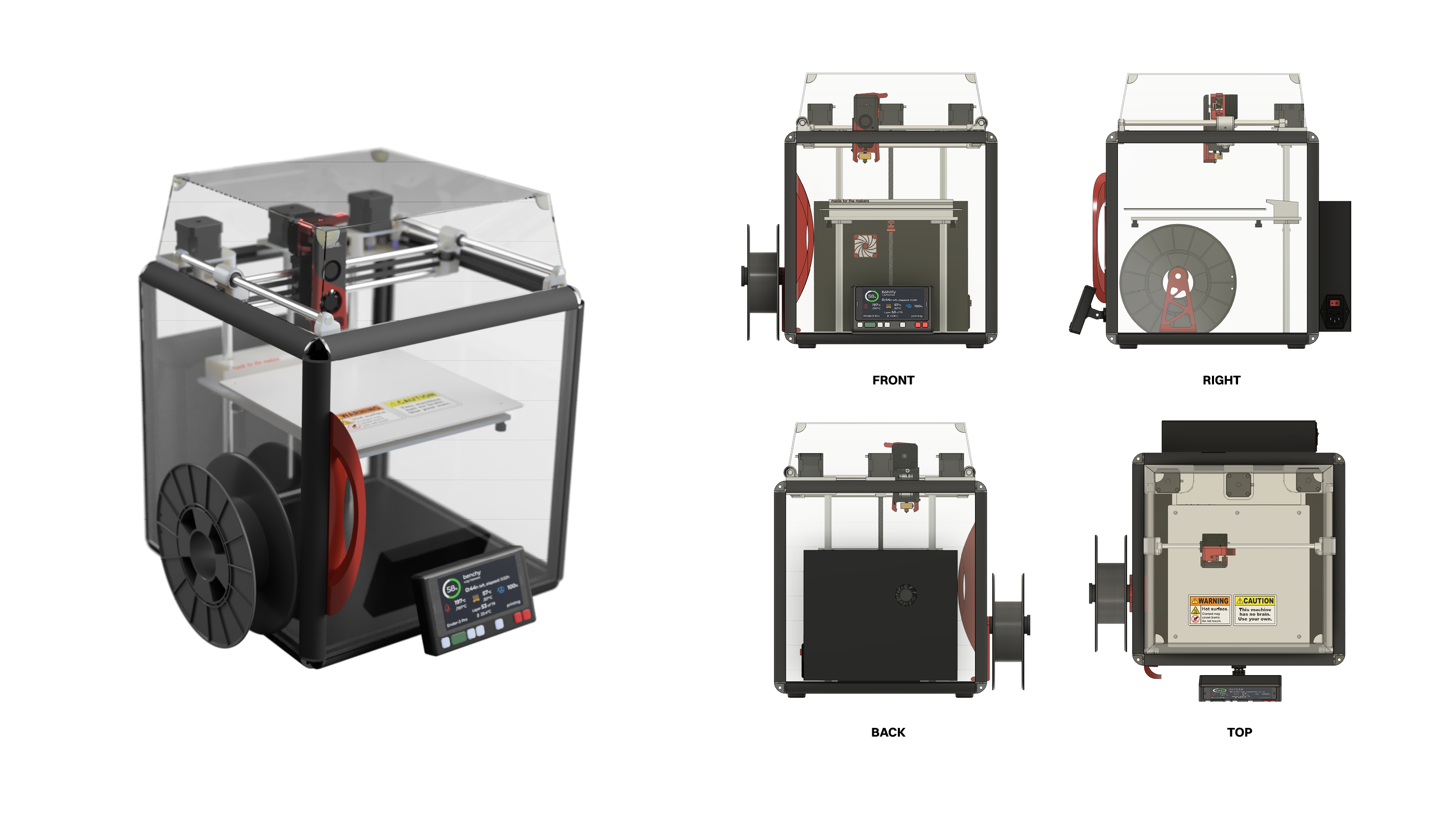
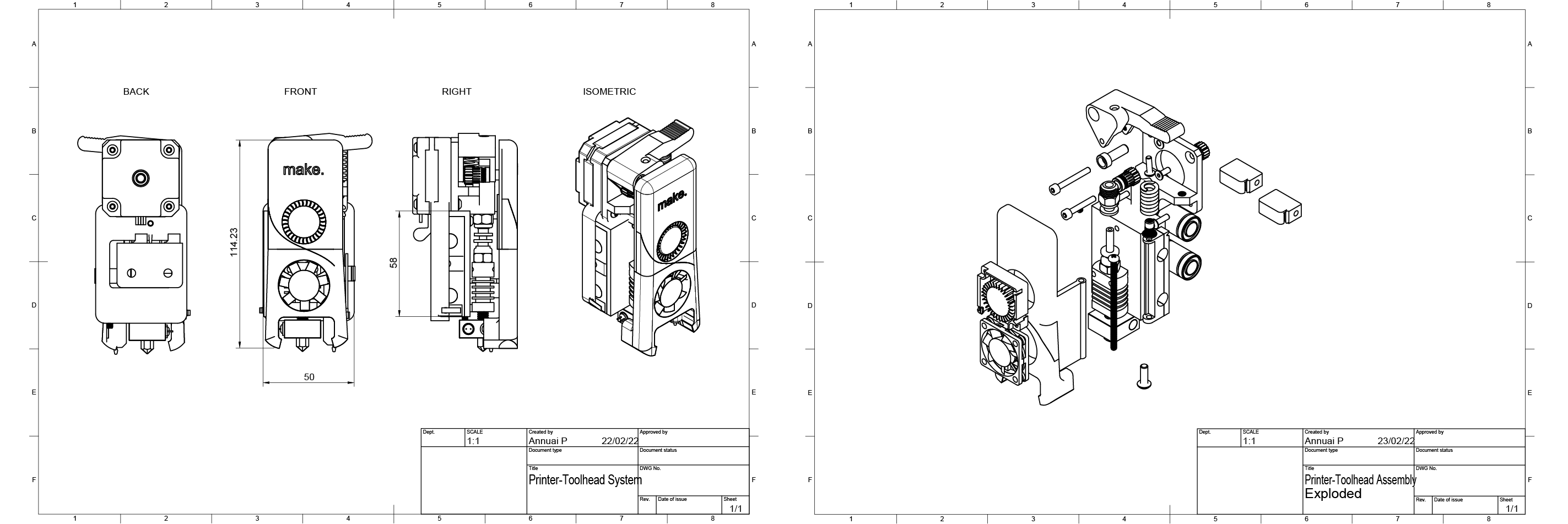
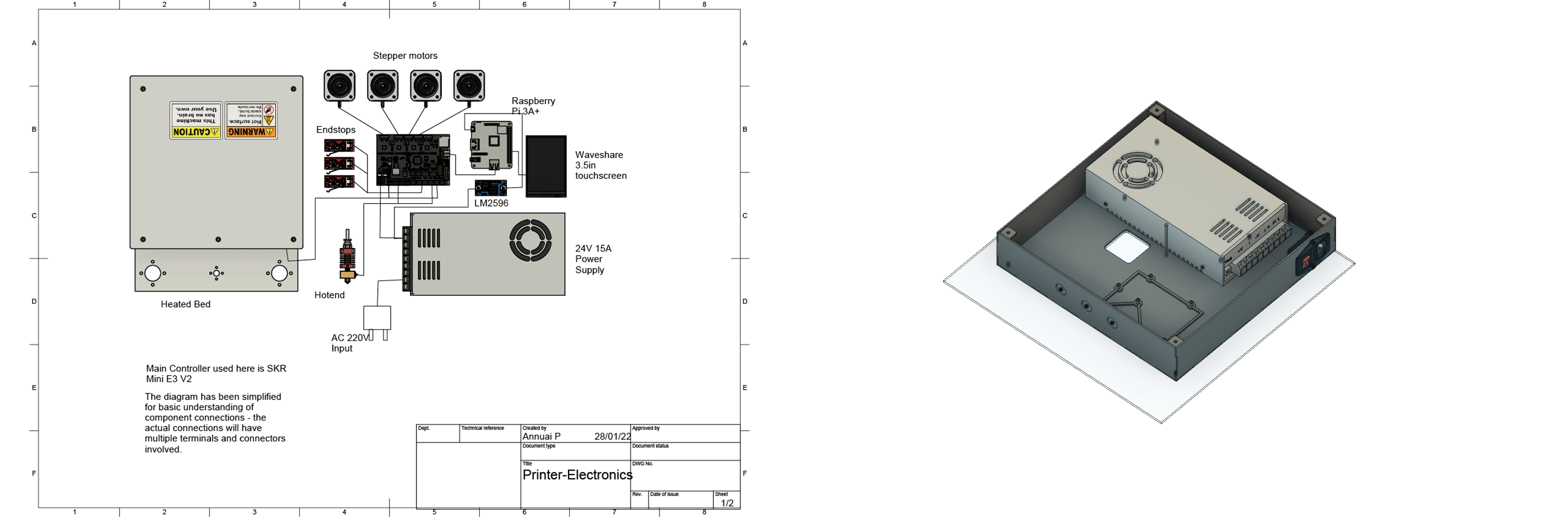
Indented Bill of Materials
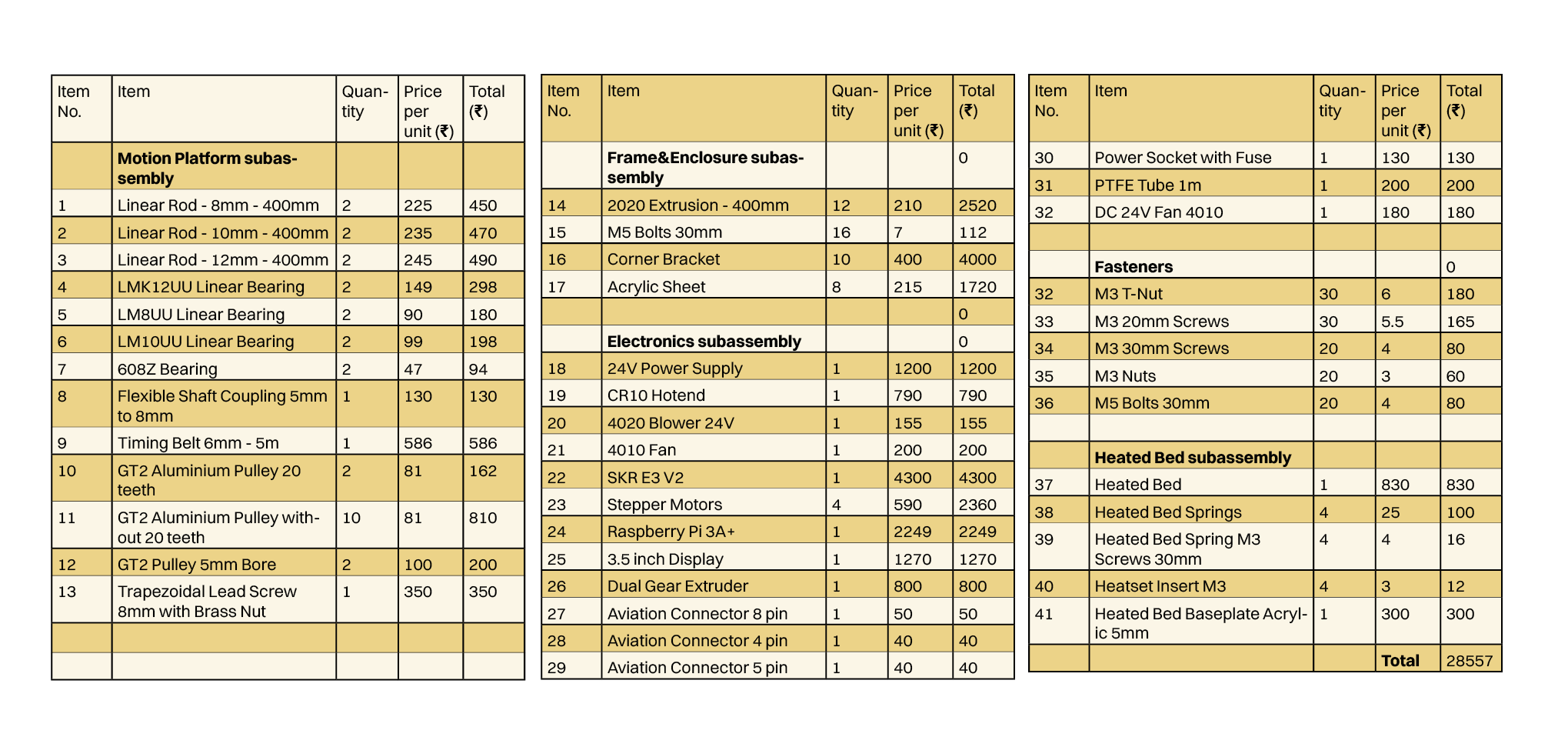
Overall product cost with all parts sourced from Indian retail stores, excluding labour and transportation, comes to around ₹32,000.
Prices sourced from major DIY part resellers — including Robu, Novo3D, Electronic Spices, Electronics Comp, and RhydoLabz.
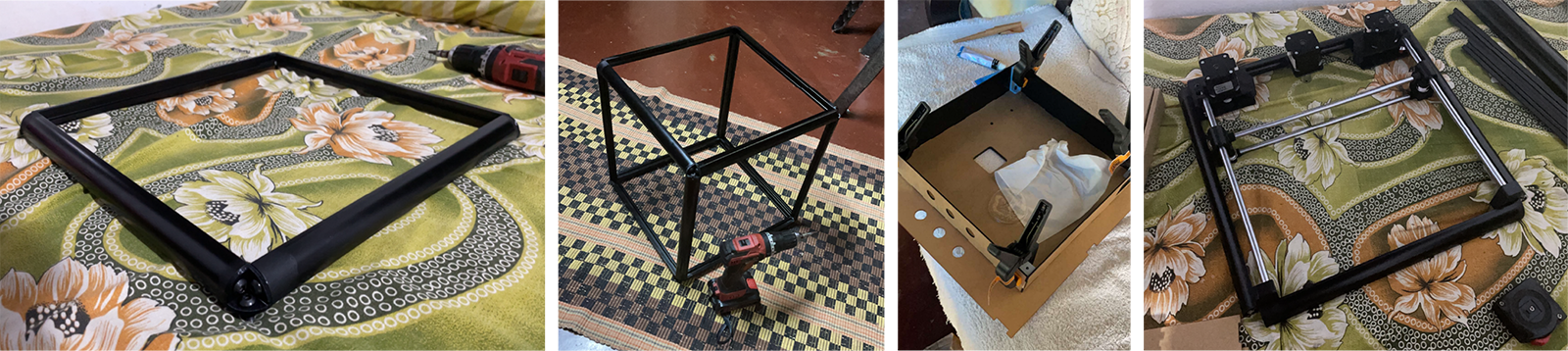
The Frame
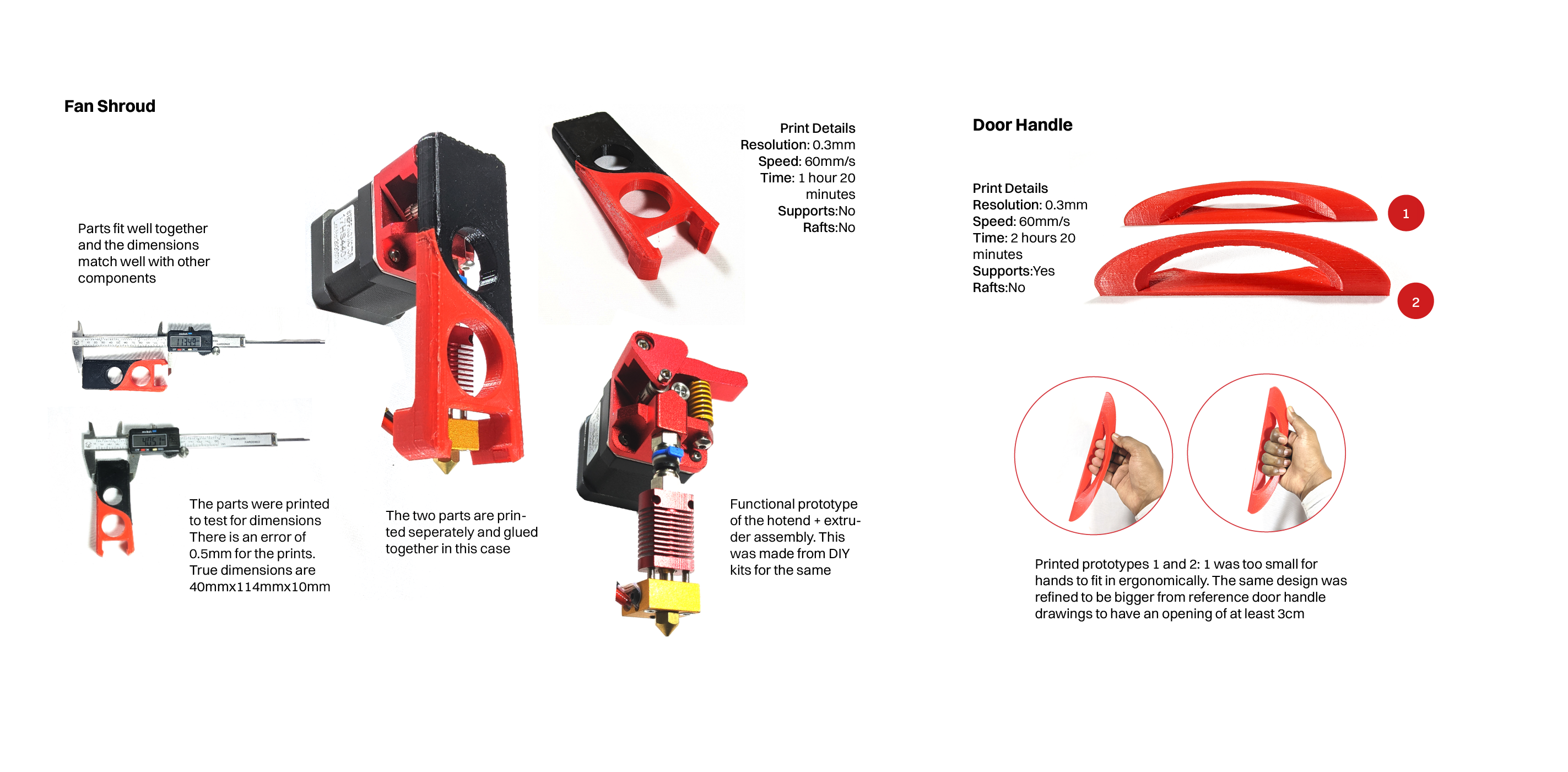
Purchased as 340mm pieces of 2020R extruded aluminium profiles. Tapped, powder coated, and connected with 3D-printed corner connectors.
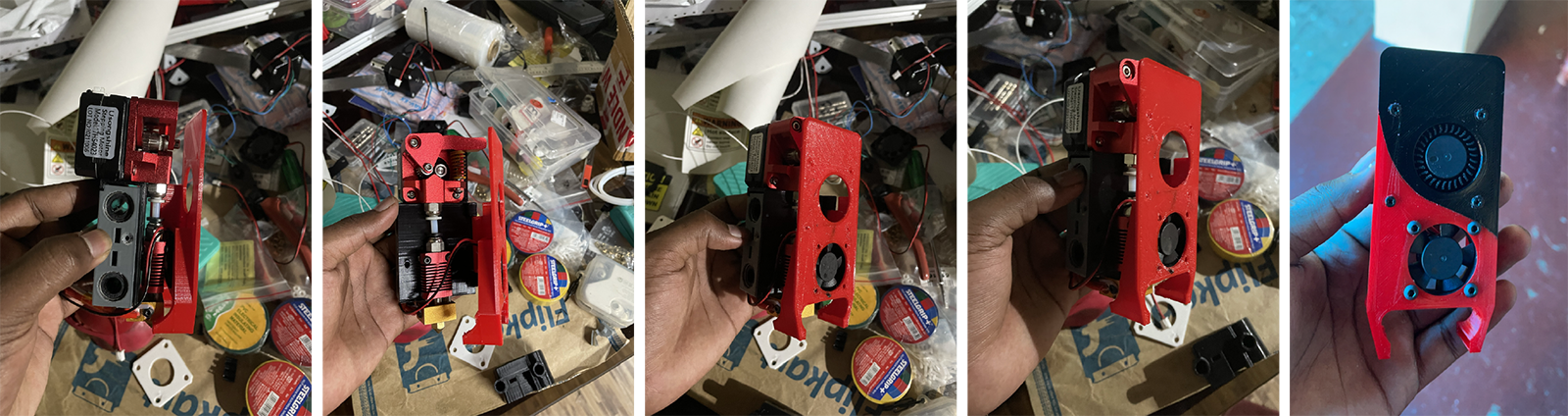
The Printhead
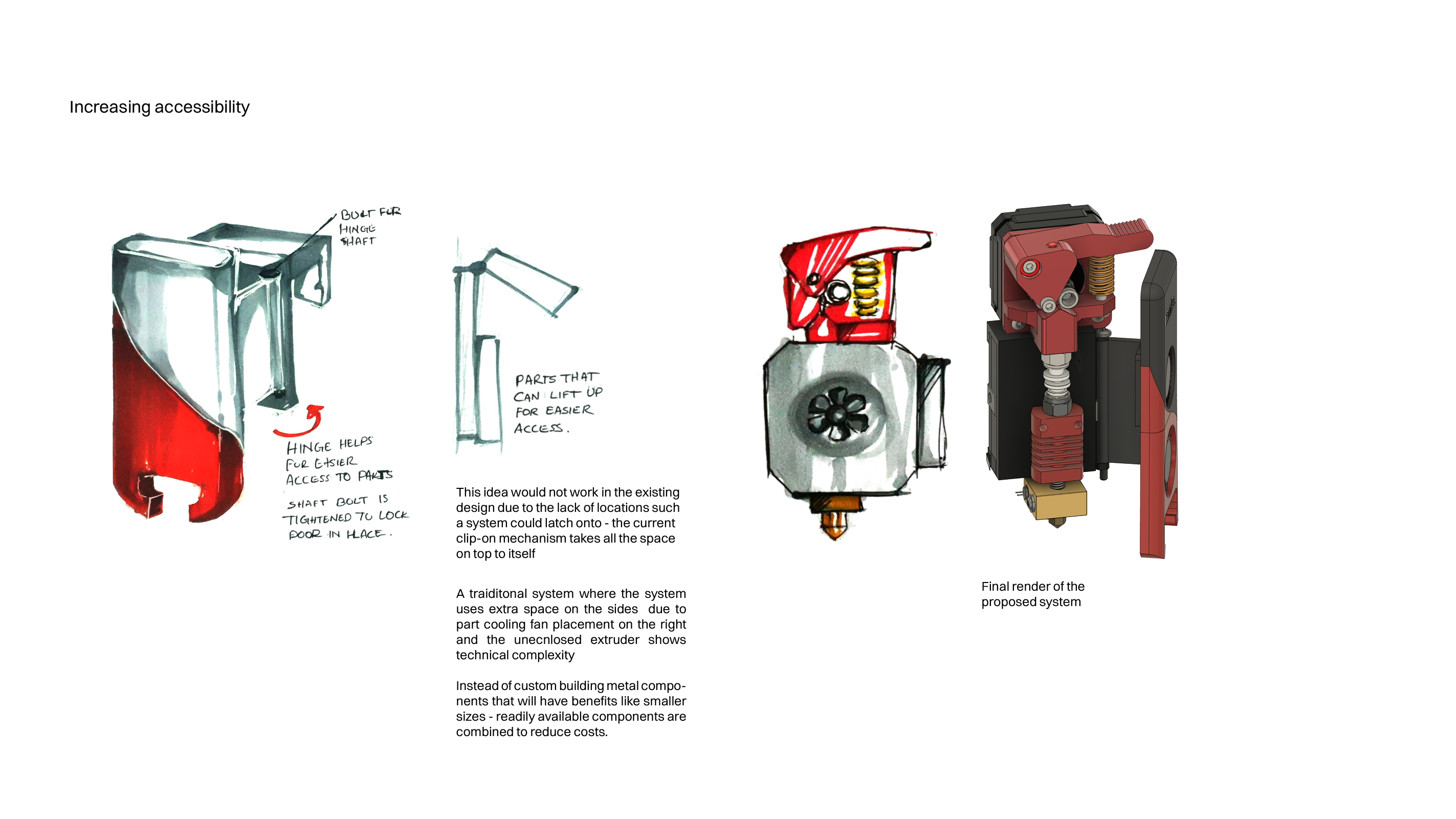
Opens easily to deal with failure — clogging is common, and an easy-access door to the printhead is a key usability win.
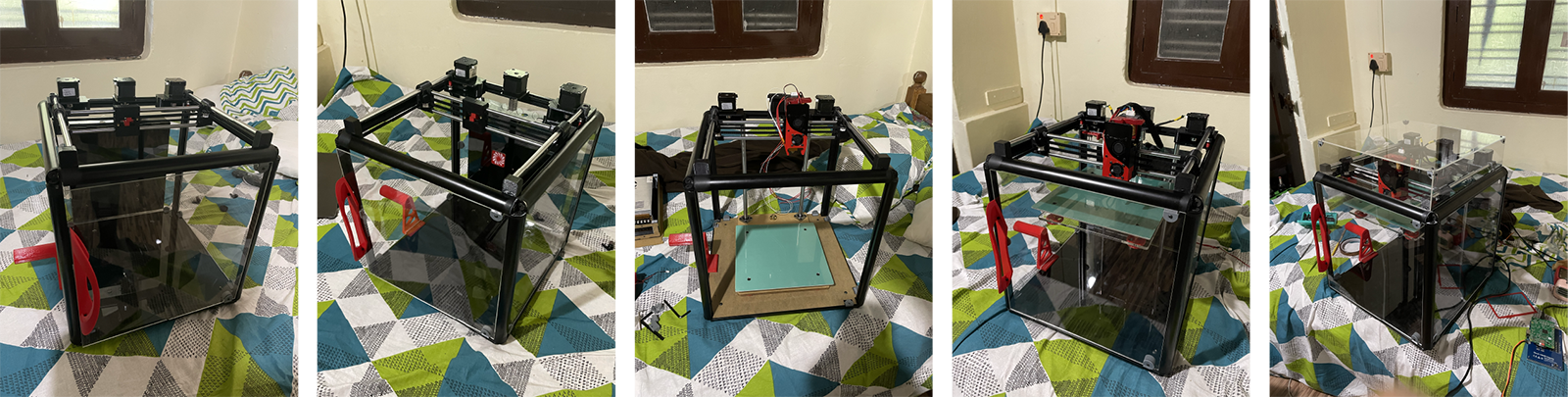
Final Machine
A fully assembled, fully functional prototype operating in the test workspace.
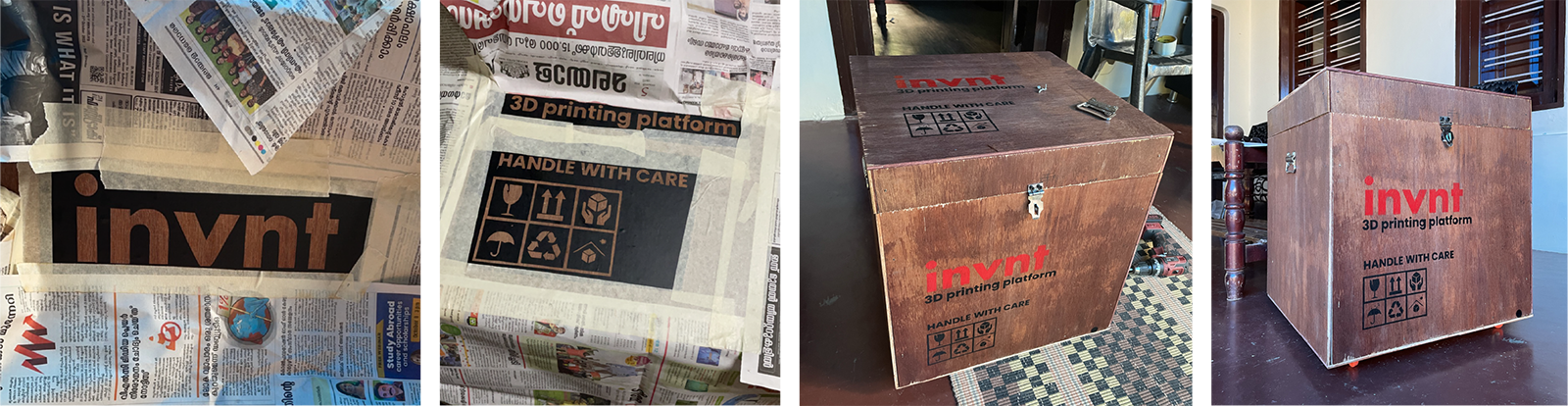
Custom Shipping Box
Made to transport the printer intact without disassembly. Stickers used as stencils for branding and handle-with-care signage.
Case Videos
Reflections & Takeaways
Technical Drawings & Engineering Documentation
Learnt how to create manufacturing-ready technical drawings with tight tolerances and accurate callouts for CNC, laser routing, and tapped profiles.
Learning New Fabrication Processes
Explored fabrication techniques beyond basic FDM — including aluminium powder coating, profile tapping, and threading. Mastered optimising print density for structural integrity with minimal filament.
Time & Project Management
The project targeted a strict 4-month deadline, which extended to 6 months of prototype iteration and 1 month of documentation. Learned to factor logistical lead times, sourcing delays, and fabrication cycles into the schedule.
Logistics & Purchase Management
As a self-sponsored project, budgeting was paramount. Initial inventory overlap from calculation errors highlighted the crucial role of a thoroughly checked Bill of Materials before active purchasing begins.
For a highly detailed exploration, design specifications, calculations, and analysis:
Read Full Project Documentation PDF →